


1980
The Napkin
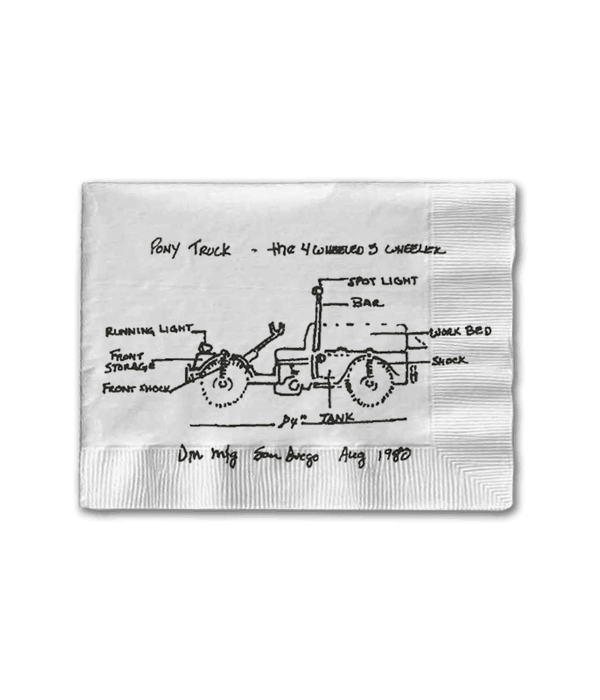
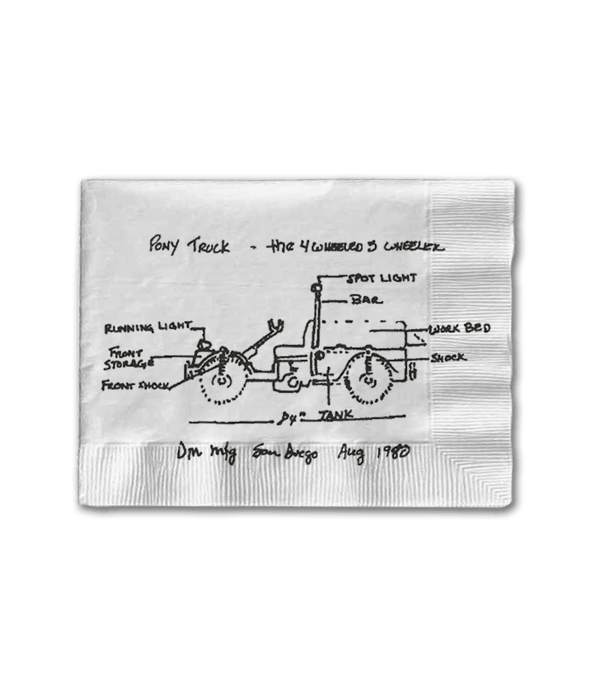
The MULE™ utility vehicle—and the entire utility vehicle category—was born in San Diego, California, on a cocktail napkin in August of 1980. This new creation was named the “Pony Truck” and was nicknamed the four-wheeled three-wheeler. Three Rocky Mountain Kawasaki (RMK)—a distributor of KMC—employees, sketched their ideas out with a simple concept in mind: build a vehicle with four wheels that could carry two people and heavier loads than an ATV.
1988
MULE™ 1000
Featuring a pick-up-truck-type design, the Kawasaki MULE™ concept revolutionized the lightweight utility vehicle. Powered by a liquid-cooled 454cc twin-cylinder engine mounted in an open-cab utility chassis with independent front and rear suspension, and rolling on four all-terrain tires with rear differential lock feature, the MULE 1000 utility vehicle was an immediate success.

1990
MULE™ 2010
The combination of selectable 2WD or 4WD with a Hi/Lo transmission made
the
MULE™ 2010 the most versatile utility vehicle on the market. Independent
front and semi-independent rear suspension, plenty of load-carrying
capacity
and a reliable 535cc engine made this MULE model suitable for almost any
work environment.
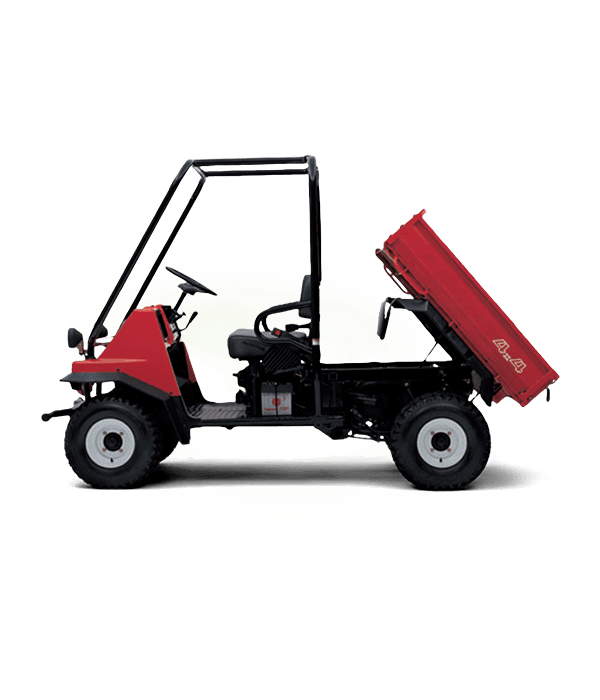
The combination of selectable 2WD or 4WD with a Hi/Lo transmission made the MULE™ 2010 the most versatile utility vehicle on the market. Independent front and semi-independent rear suspension, plenty of load-carrying capacity and a reliable 535cc engine made this MULE model suitable for almost any work environment.
1991
MULE™ 2020
Nicknamed the “Tenderfoot” MULE™, this medium-class “turf” MULE utility vehicle was specially designed for use on golf courses, sporting fields and other places where a soft “footprint” is important. Powered by a fan-cooled single-cylinder engine the MULE 2020 featured a dual-mode differential that could be locked for maximum traction or unlocked to minimize ground disturbance. Turf-type tires and easy-to-operate controls made this hard-working MULE an instant hit.

1991
MULE™ 2030
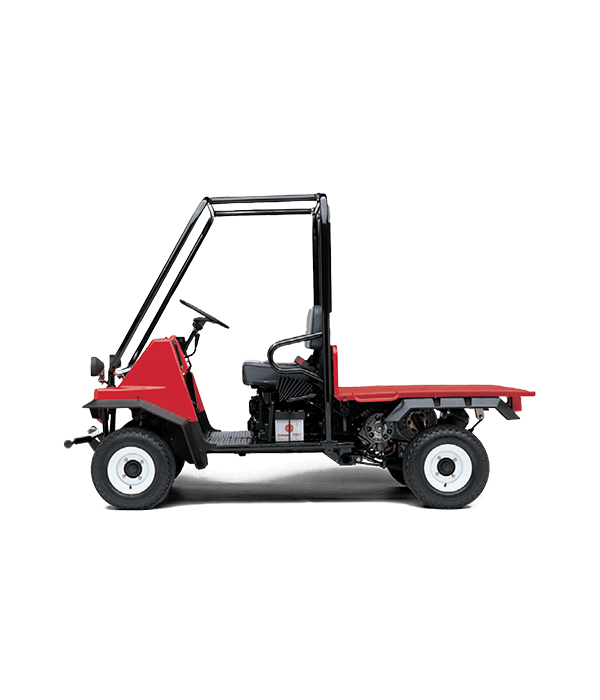
In 1991, sales of the MULE™ 2030 utility vehicle commenced. Offering many of the features of the MULE 2020, this 2WD model was designed especially for industrial work. It had special fuel and electrical systems to meet strict industrial standards, a flat bed and hard-surface tires that offered long life on paved in-plant surfaces commonly found in manufacturing companies and warehouses.
1991
MULE™ 500
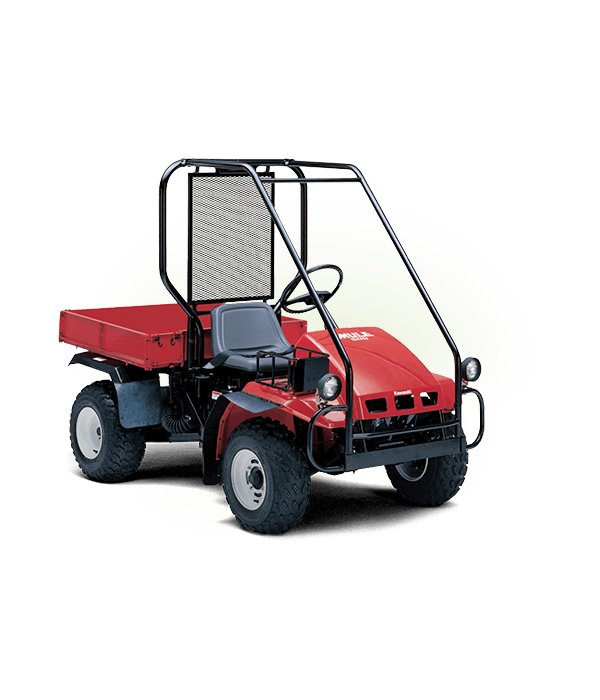
In 1991, the MULE™ 500 utility vehicle was also introduced. This personal-sized utility vehicle was compact in size, easy to use, and could easily fit into the back of a pick-up truck for transportation to work sites.
1993
MULE™ 2510
A larger, more-powerful liquid-cooled 617cc
V-Twin engine, 4WD, heavy-duty carrying capacity and a tilting cargo bed
made the 2510 a top-of-the-line MULE™ model. Other advanced features
included dual-mode differential, a high-mounted cab-frame air intake, a
fan-cooled belt converter and all-wheel self-adjusting hydraulic brakes.
A larger, more-powerful liquid-cooled 617cc V-Twin engine, 4WD, heavy-duty carrying capacity and a tilting cargo bed made the 2510 a top-of-the-line MULE™ model. Other advanced features included dual-mode differential, a high-mounted cab-frame air intake, a fan-cooled belt converter and all-wheel self-adjusting hydraulic brakes.
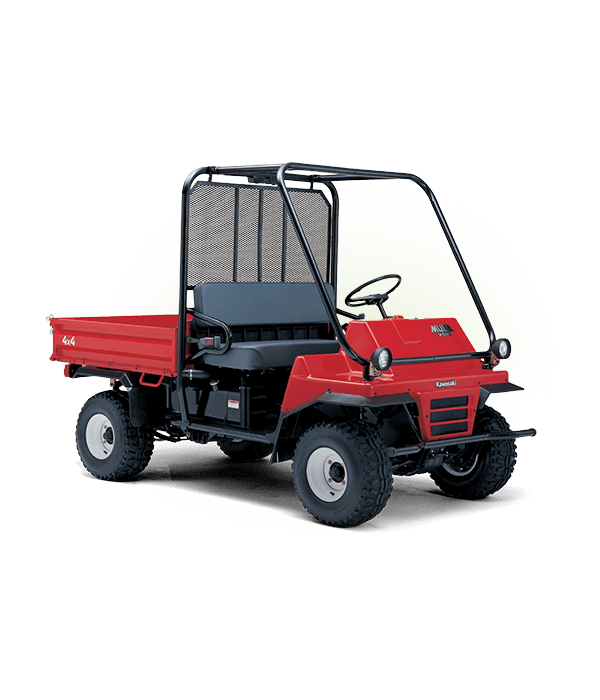
1993
MULE™ 2520
In 1993, sales of the MULE™ 2520 utility vehicle, the second in the MULE 2500 series, began. The combination of a quiet-running liquid-cooled V-Twin engine with a sound-insulated engine box and turf tires made it possible to handle the toughest jobs with a quiet and light “footprint.”
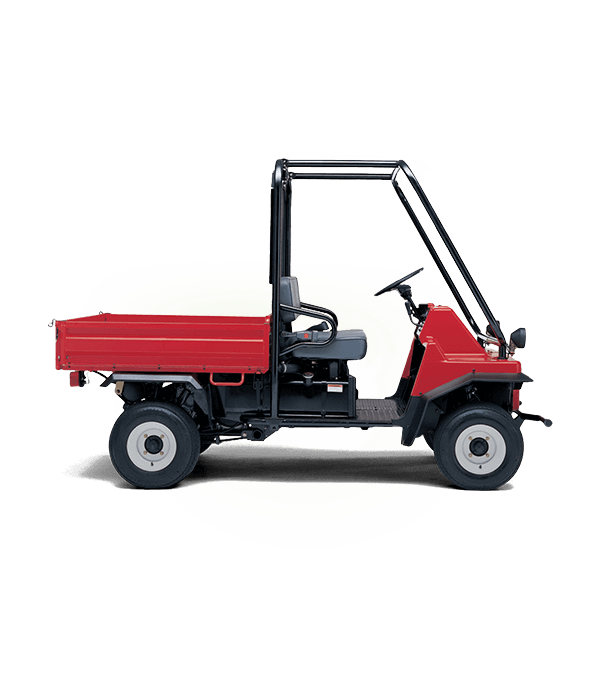
1994
MULE™ 2500
With the MULE™ 2500 series setting industry standards, Kawasaki introduced the MULE 2500 utility vehicle. With most of the same features as the MULE 2510, this 2WD fully automatic version was a class leader.
1997
MULE™ 550
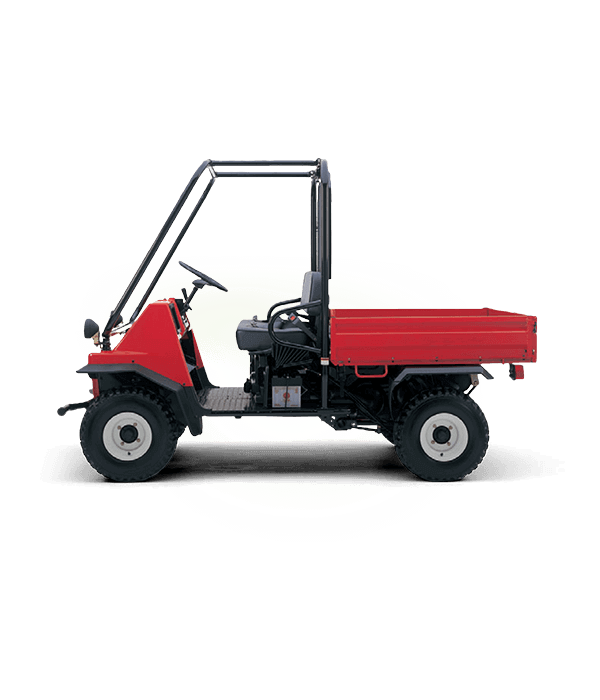
In 1997, sales of the MULE™ 550 utility vehicle began. Newly designed, its fan-cooled engine with internal engine balancer and proven four-wheel suspension gave the MULE 550 a relaxing ride quality. A bench seat for two made this the first two-person compact MULE model.
2000
MULE™ 2510
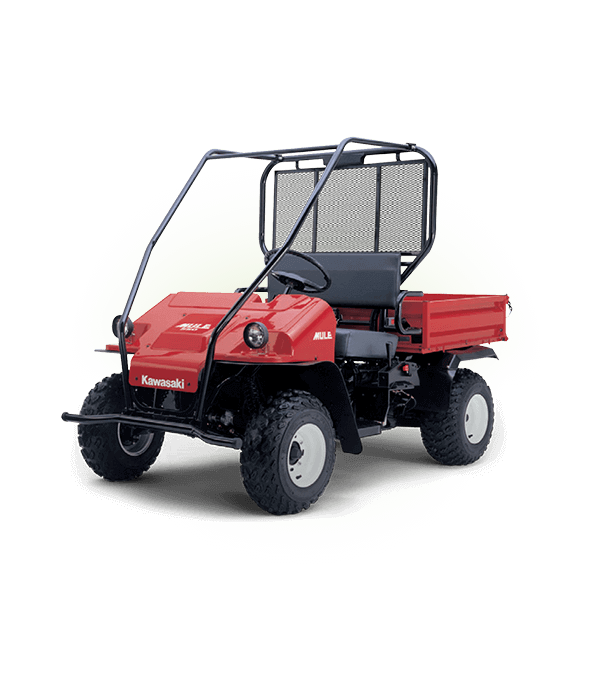
Powered by a liquid-cooled, three-cylinder, 953cc diesel engine, the MULE™ 2510 Diesel offered outstanding fuel economy and increased load capacity. Dual-mode differential, independent strut-type front suspension and 4WD made this heavy-duty MULE utility vehicle a popular choice on work sites around the world where diesel is the primary fuel, such as in agriculture and underground mining.
2001
MULE™ 3000 SERIES
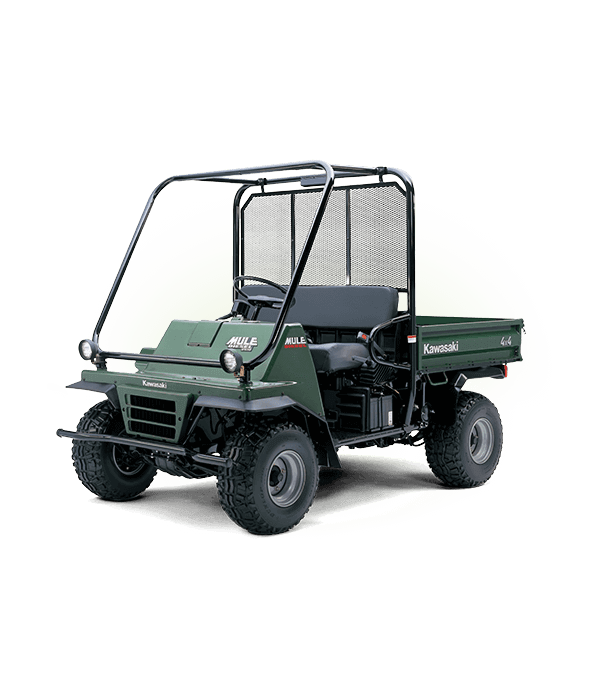
The release of the 4WD MULE™ 3010, turf MULE 3020 and 2WD MULE 3000 marked the latest evolution in Kawasaki’s MULE history. Powered by gutsy, liquid-cooled, 617cc, V-Twin engines coupled to all-new Continuously Variable Transmissions (CVT), they were some of the hardest working and most durable machines Kawasaki had ever produced. Radical new pick-up truck styling, improved ergonomics and other automotive design features made this new generation of stylish, hardworking utility vehicles an instant hit.
2003
MULE™ 2010
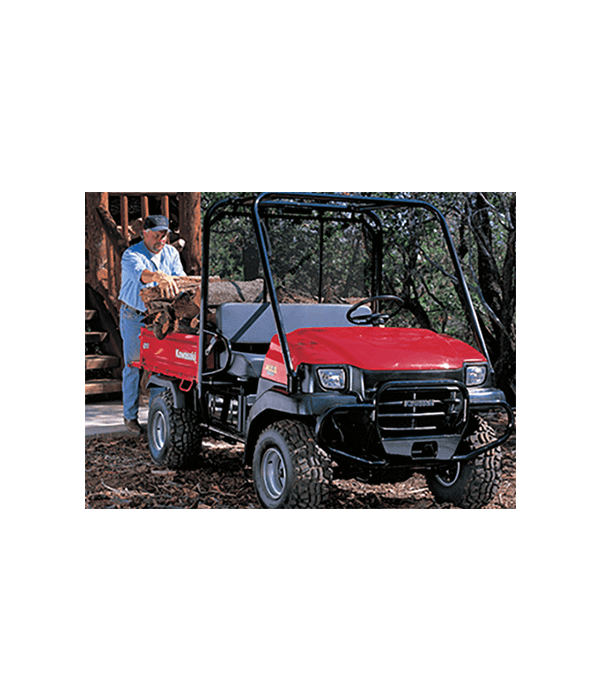
Another machine in the MULE™ 3000 series, the 3010 Diesel featured the proven, liquid-cooled, three-cylinder, 953cc diesel engine of the 2510 Diesel dressed in the pick-up truck styling of the other 3000 Series models. Upgrades included a stronger CVT belt, improvements to the exhaust system and a new cylinder block. Hardworking and highly versatile, the 3010 Diesel’s fashionable new styling package clearly positioned it at the top of the MULE line.
2003
MULE™ 3010
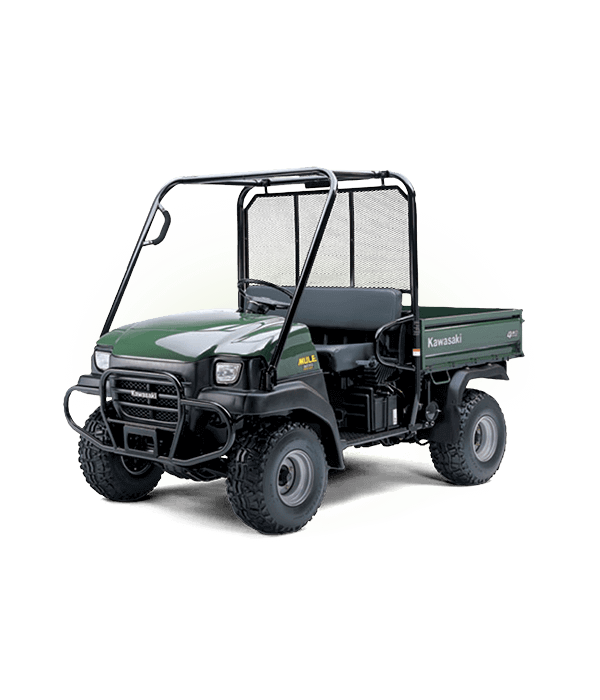
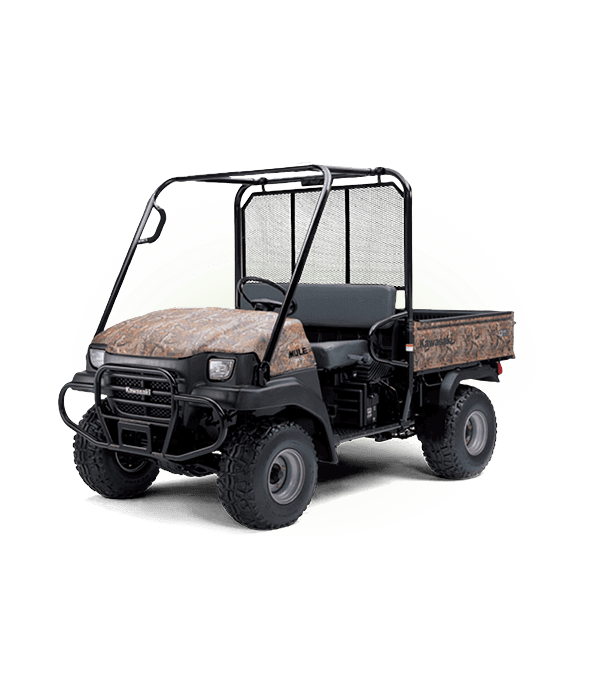
In 2003, sales of the first camouflage MULE™ utility vehicle commenced. Based on the successful MULE 3010, the latest addition to the MULE 3000 Series provided woodsmen a rugged companion with ample load-carrying capability.
2005
MULE™ 610 4X4
n 2005, sales of the MULE™ 610 4x4 and 600 commenced. The new “baby” MULEs featured new 401cc engines, more rugged suspension, new high-volume bodywork and a number of other features designed to increase their comfort and convenience. The 610 4x4 also featured selectable 2WD/4WD—a class first—and large 24” tires. Both models were still small enough to fit in the back of a pick-up truck.

2005
MULE™ 3010 Trans4x4®
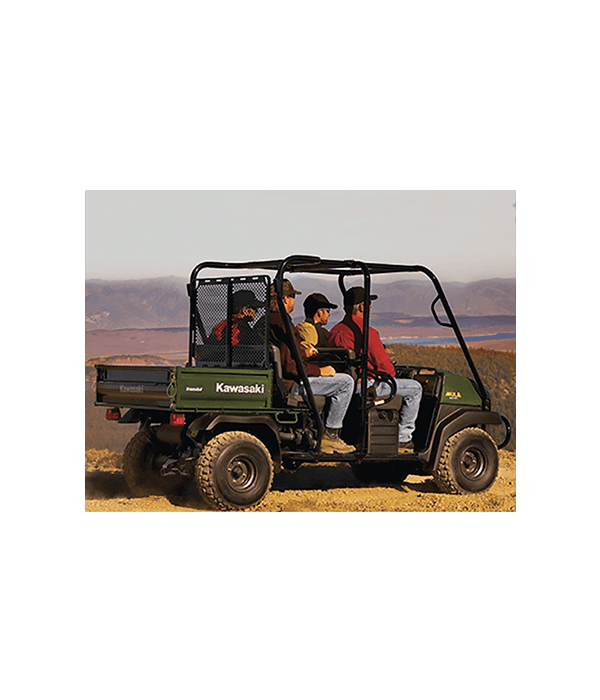
It was only fitting that Kawasaki, as pioneers in the utility vehicle market, be the first to release the world’s first convertible MULE™. At first glance the MULE 3010 Trans4x4®looked like other 3000 Series MULEs. But the Trans4x4 featured two rows of seats, enabling it to accommodate four passengers. Being easily able to switch between two-passenger and four-passenger modes gave the Trans4x4 much greater flexibility. In four-passenger mode, a family, work crew or group of hunters could be accommodated; in two-passenger mode, cargo space was maximized.
2007
MULE™ 3010 Trans4x4® Diesel
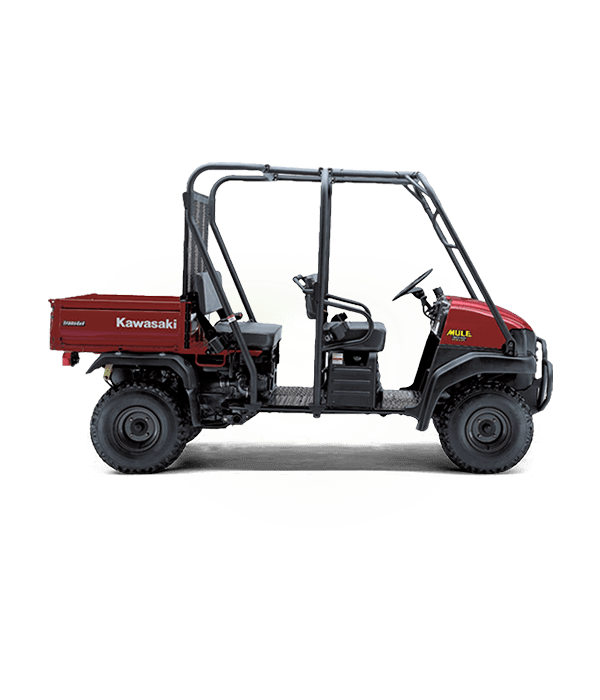
For those really tough jobs, Kawasaki offered the MULE™ 3010 Trans4x4® Diesel. Its powerful 953cc diesel engine churned out mountains of torque for serious hauling and towing capability. Coil-reinforced shocks for the De Dion axle and leaf-spring rear suspension ensured a high load capacity. And being a Trans4x4 meant high versatility—whether transporting a work crew in four-passenger mode or hauling cargo with the extended cargo bed in two-passenger mode.
2008
MULE™ 3010 Trans4x4® Diesel
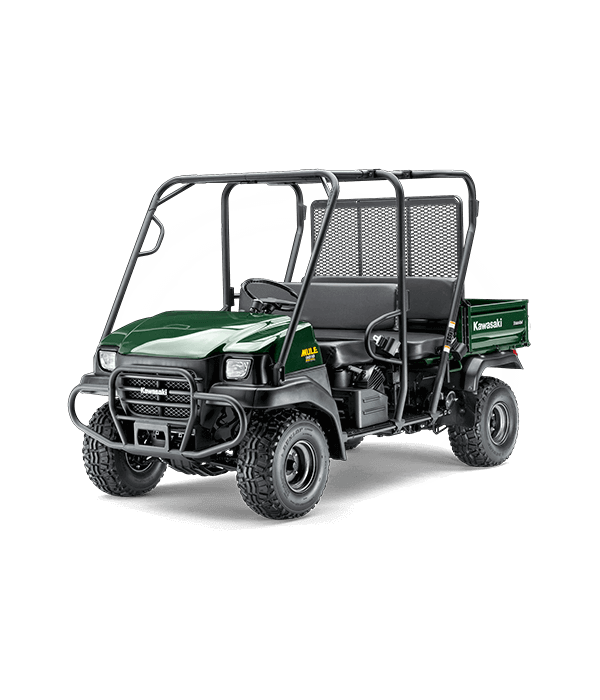
Making it even easier to do a hard day's work, the MULE™ 3010 Trans4x4® Diesel received a high-grade electric power steering system. Using input from a vehicle speed sensor and torque sensor, the ECU determined the amount of steering assistance necessary. Assistance was greatest when needed most (at extremely low speeds and when stopped) and reduced at higher speeds to ensure stable handling. Kawasaki's other diesel MULE, the MULE 3010 Diesel 4x4, received the same update..
2009
MULE™ 4000 Series
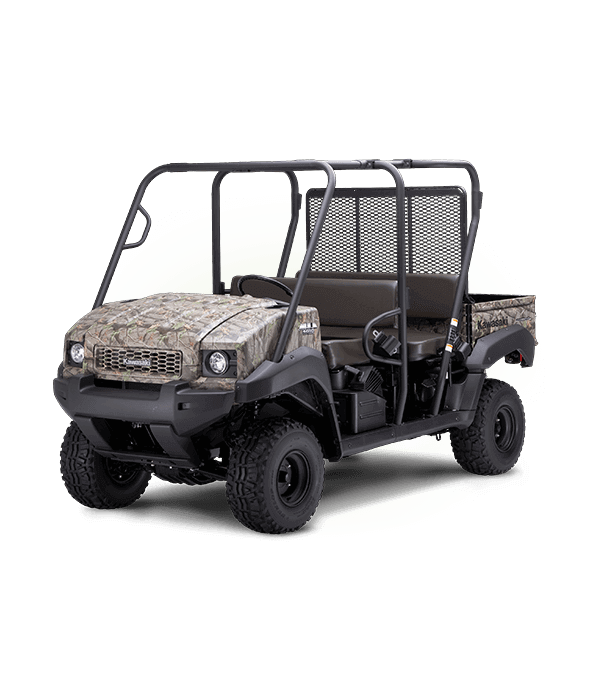
The MULE™ 4000 Series marked the next step in the evolution of the MULE utility vehicle concept. A new, no-nonsense, big-truck styling package reflected the tough, powerful nature of MULE utility vehicles and their ability to get the job done. The gasoline-powered MULEs came with fuel injection, ensuring easy starting and consistent, stable power in all operating conditions. And speed-sensitive electric power steering (first seen on the 2008 diesel MULEs) was now featured on all 4WD models, offering natural handling at all times.
1986
THE 20TH ANNIVERSARY OF KMC Four buildings in Orange County, CA are consolidated into new Irvine corporate headquarters for sales, marketing, planning, finance, legal and administration.

2010
MULE™ 610 4x4 XC
The newest addition to the MULE™ utility vehicle line, the MULE 610 4x4 XC (or “Bigfoot” MULE) featured larger, 26” tires and 12” wheels. Its enhanced off-road capability and increased ground clearance was complemented by a sporty design and graphics package. Combined with the dependable performance of the MULE 610 4x4, this latest compact utility vehicle opened the door to greater potential for leisure activities.
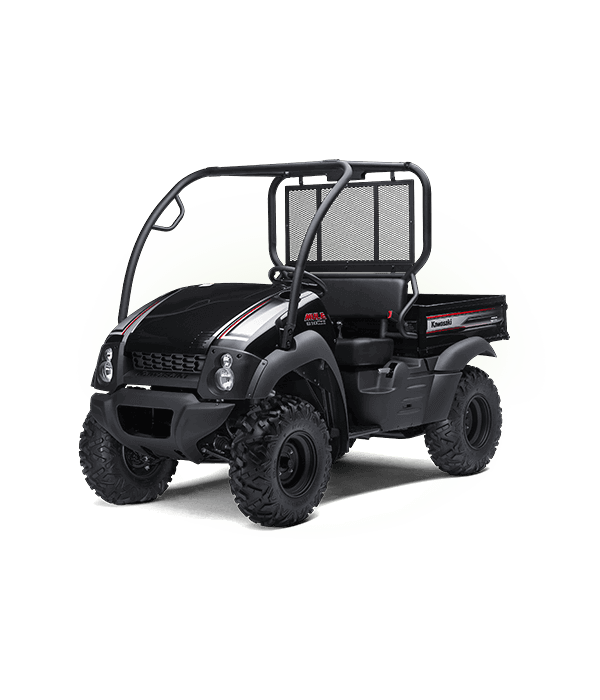
1988
Kawasaki introduces its first production utility vehicle–the 1988 KAF450-B1. Featuring a pick-up-truck-type design, the Kawasaki MULE™ side x side revolutionized the lightweight utility vehicle category. Powered by a liquid-cooled 454cc twin-cylinder engine mounted in an open-cab utility chassis with independent front and rear suspension, and rolling on four all-terrain tires with rear differential lock feature, the MULE 1000 utility vehicle is an immediate success.
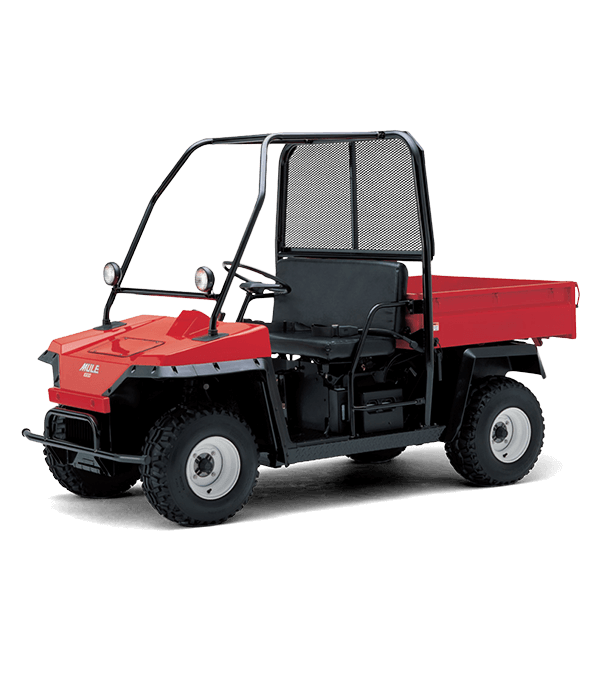
2015
MULE PRO-FXT™
In 2015, Kawasaki changed the utility side x side market with the introduction of the MULE PRO-FXT™. Since the inception of the MULE over 35 years ago, and with over 130 years of Kawasaki Heavy Industries, Ltd. engineering, the latest edition of the MULE PRO-FXT has become a truly innovative new way to work and play. This full-size, high capacity, three-to-six passenger Trans Cab™ model brings a whole new level of comfort and performance.
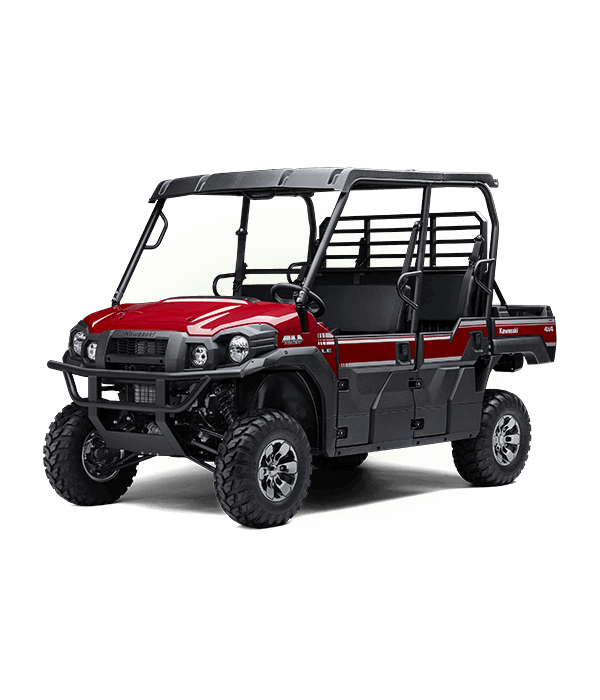
1990
One-millionth unit is assembled at the Lincoln assembly plant. Kawasaki Robotics (USA), Inc. becomes a subsidiary of KMC.
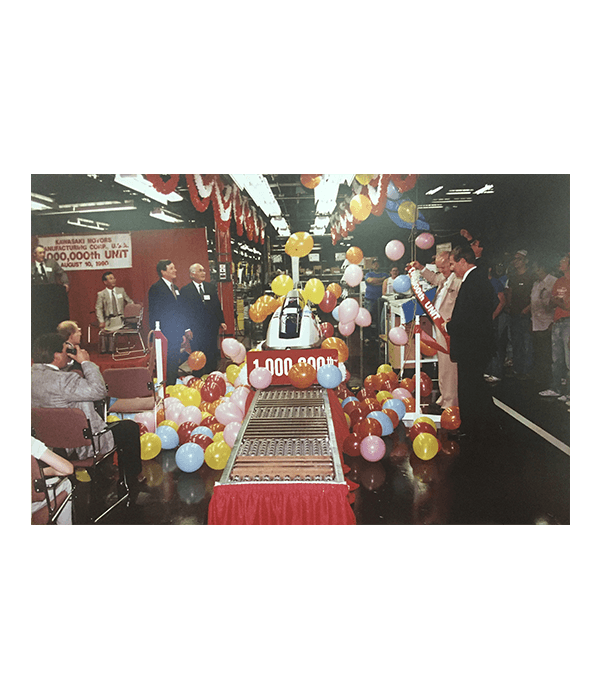
2016
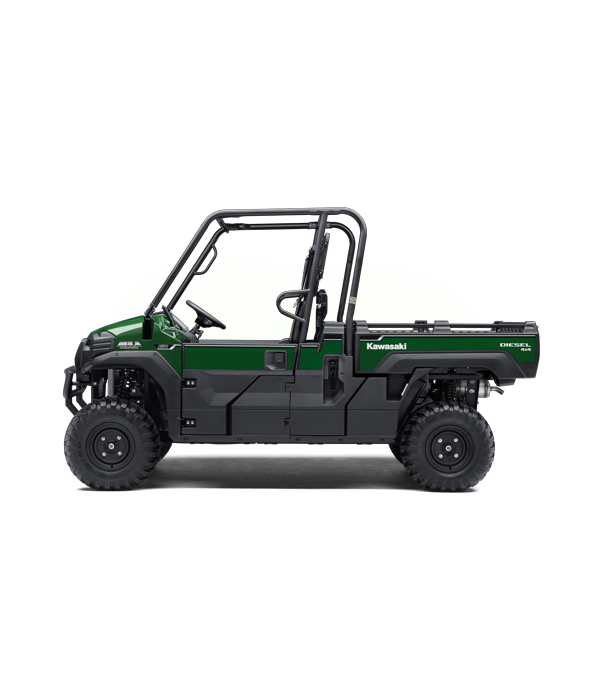
MULE PRO-DX™
In 2016 we introduced the newest additions to our expanding line of class-leading MULE™ PRO side x sides—the MULE PRO Diesel Series. Built strong to work hard, the MULE PRO-DX™ and MULE PRO-DXT™ vehicles boast a massive 933cc triple-cylinder power plant to handle your toughest work demands, helping you power through the workday.
2017
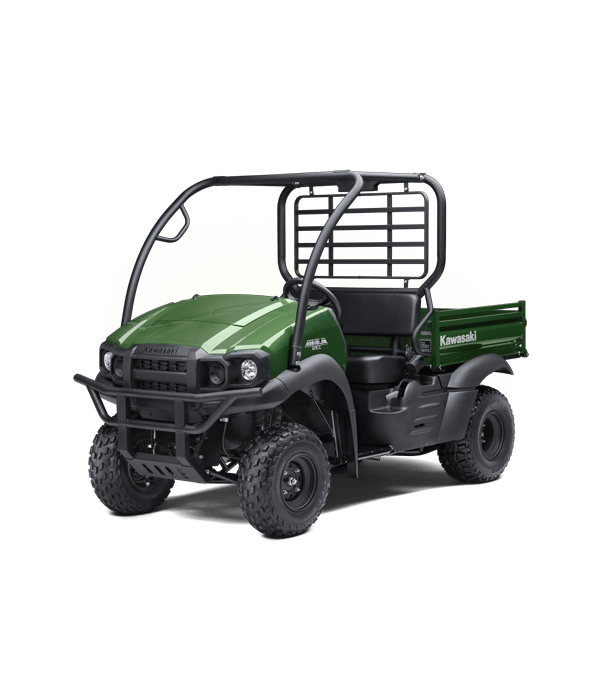
MULE SX™
Featuring a bold and rugged new appearance, the new 2017 MULE SX side x sides are packed with value and undeniable capability. As a durable and compact workhorse it's capable of maneuvering in tight spaces and easily fits in the bed of a full-size pickup truck, giving you the freedom and flexibility to take on the toughest jobs.
2018
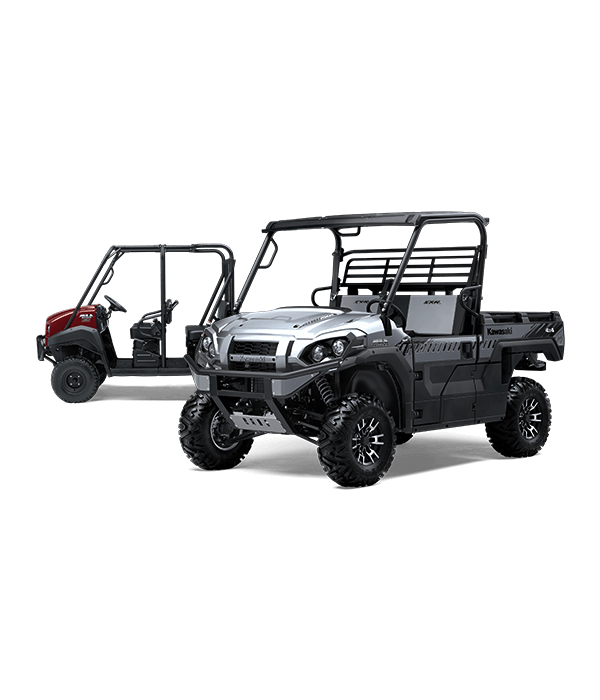
TWO NEW MODELS TO CELEBRATE 30 YEARS OF MULE™
Kawasaki celebrates 30 years of MULE™ by adding two impressive side x sides to its arsenal. Packed with premium styling and powerful capability, the new compact 2018 MULE PRO-FXR™ plays just as hard as it works so you can cut loose when you want and ride like a boss. The 2018 MULE 4000 Trans™ features a Trans Cab™ system that allows it to quickly convert between a 2-passenger cargo hauler and a 4-passenger crew mover. Needless to say, both machines are truly worthy of carrying forth the Kawasaki STRONG legacy.
2023
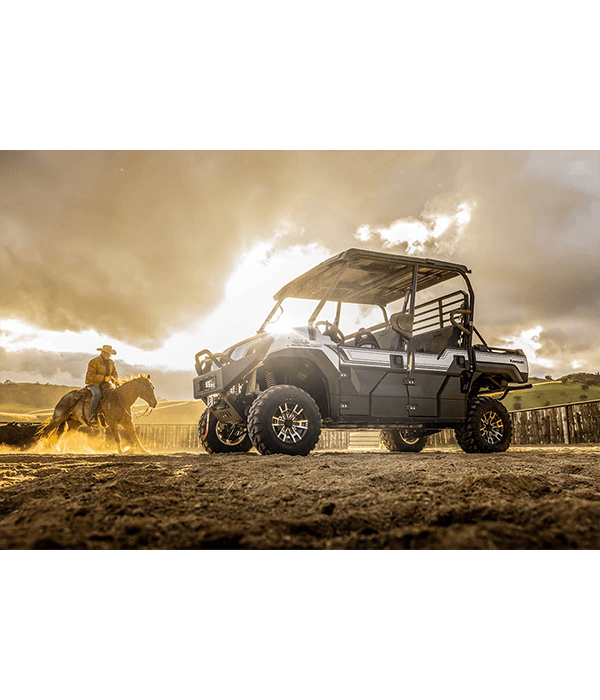
MULE PRO 1000 SERIES
Kawasaki introduces a new series of side x sides to its 2024 MULE™ lineup with the MULE PRO-FX™ 1000, MULE PRO-FXR™ 1000, and MULE PRO-FXT™ 1000 models. Kawasaki's MULE PRO 1000 models are renowned as full-size utility/recreation side x sides that offer high capability, durability, and class-leading comfort.
Use the skip buttons to advance/reverse 1 or 5 slides in the timeline
1966
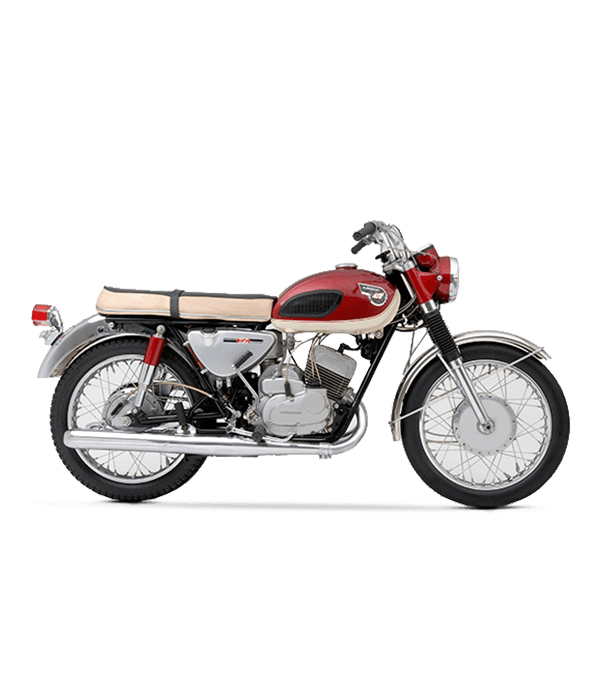
American Kawasaki Motorcycle Corp. is established in Delaware with a sales office located at 208 South LaSalle St. Chicago, IL; and a parts warehouse set up in an old meat packing company at 2860 North Lincoln Ave, Chicago, IL. American Kawasaki Motorcycle Corp., Jim Deehan, a talented road racer and Kawasaki technician, enters and wins first road race in America with the newly released Samurai 250cc A1 at Willow Springs, CA. A1-250cc Samurai twin-cylinder two-stroke.
1967
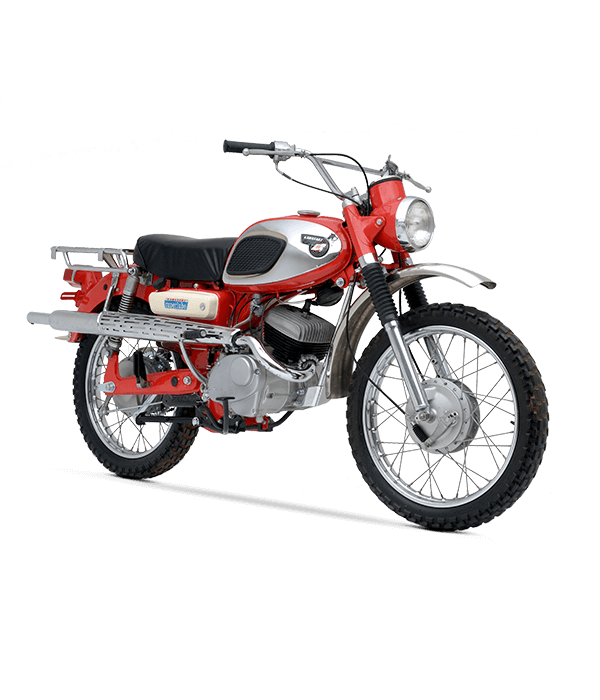
Kawasaki introduces a new racing machine based on the Samurai 250 called the A1R, featuring racing red fuel tank colors adopted from earlier B8M 125cc racing machines. American Kawasaki executives begin to discuss competition racing in America and the need to stay ahead of other manufacturers when it comes to performance and style.
1969
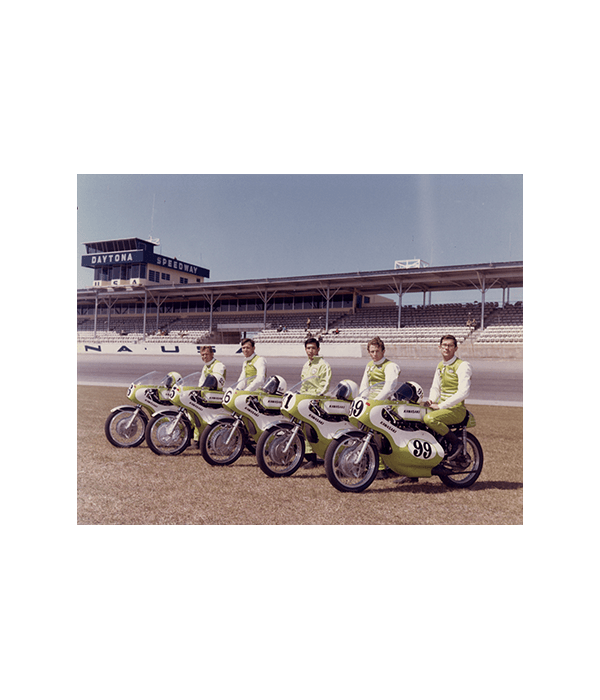
To increase visibility in racing events a new color is chosen. Kawasaki Racing Green, a special color blended by the famous custom painter Molly (Rollin Sanders) is used.
1969
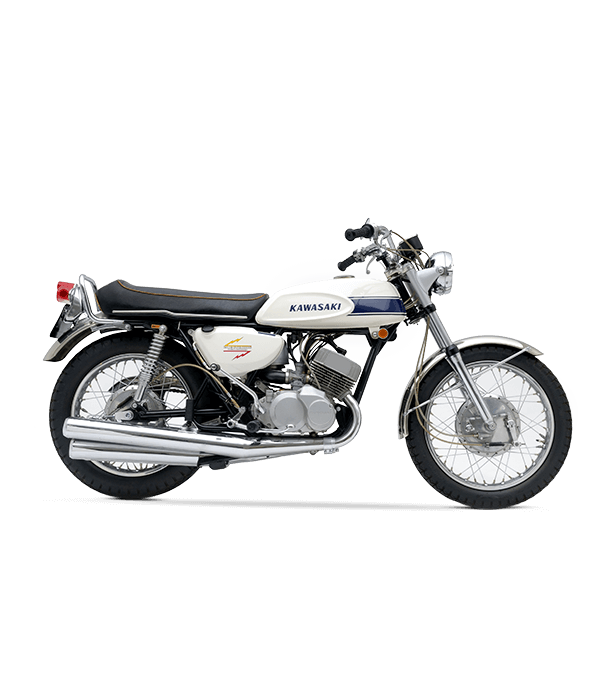
Kawasaki introduces a new motorcycle, the H1 500cc three-cylinder two-stroke named the Mach III. The motorcycle world is stunned by the Mach III motorcycle’s high performance as it quickly becomes the world’s quickest production motorcycle.
1970
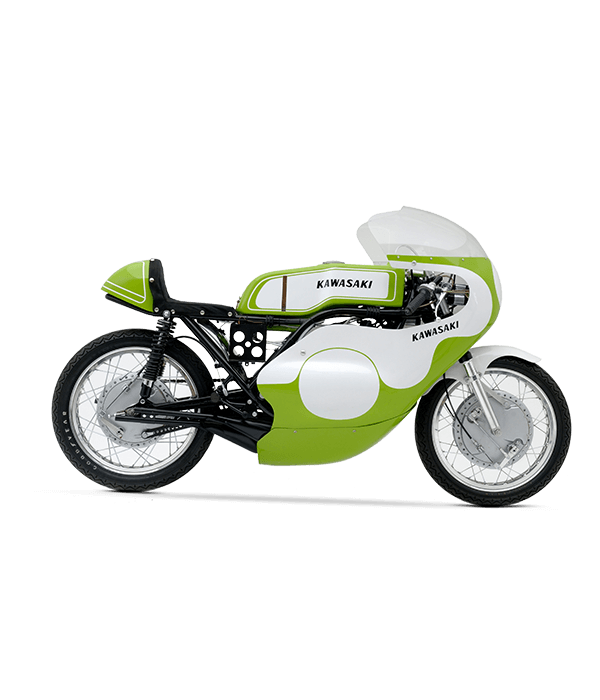
The H1R-500cc Road Racer is based off the street version of the H1 and features a two-stroke, three-cylinder engine.
1971
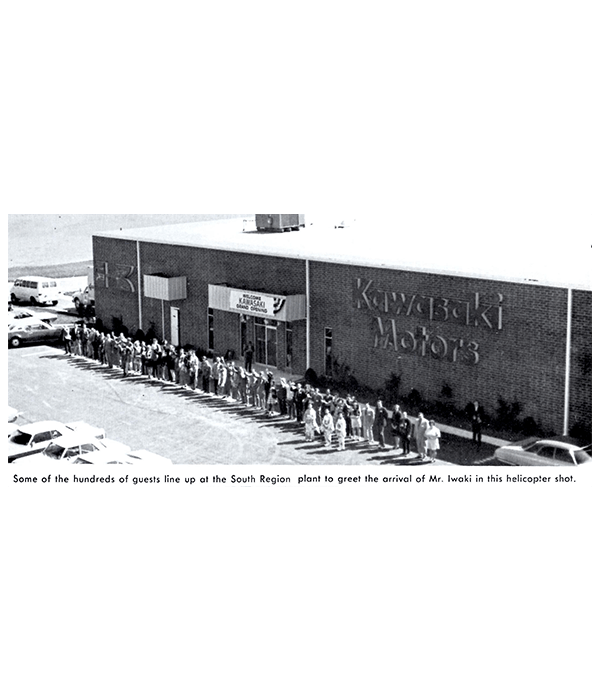
To expand and strengthen KMC, a new South Region sales and parts operation opens in Atlanta, Georgia.
1972
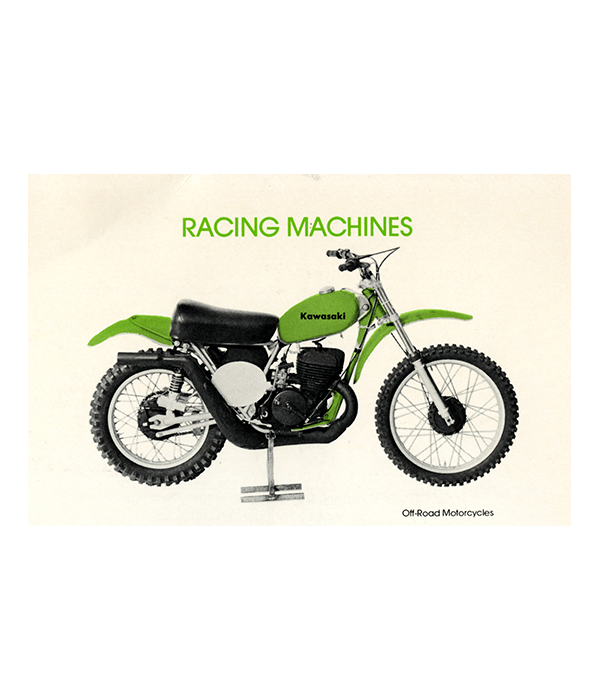
Kawasaki R&D develops a 450cc works motocross bike named the F12M. Brad Lackey rides the F12M to the championship, winning Kawasaki its first AMA 500cc National Moto-Cross Championship.
1973
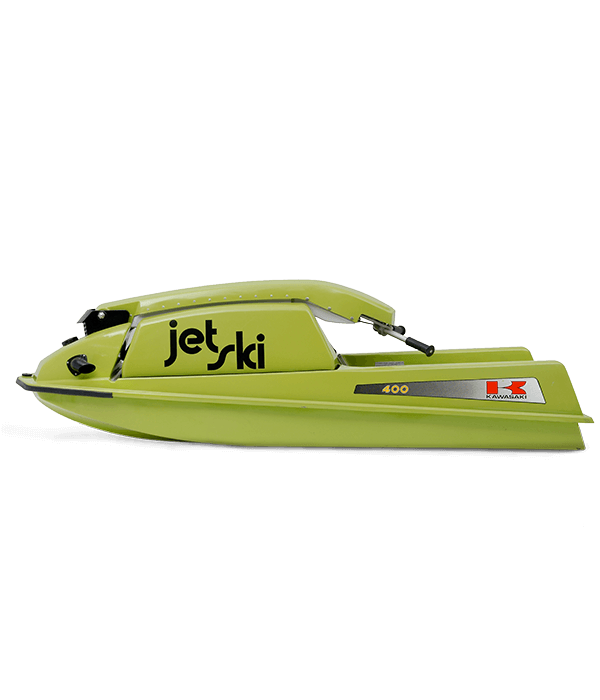
KMC test-markets a new product calling it the Kawasaki Jet Ski® watercraft while producing limited sales with their two models, the WSAA and WSAB.
1973
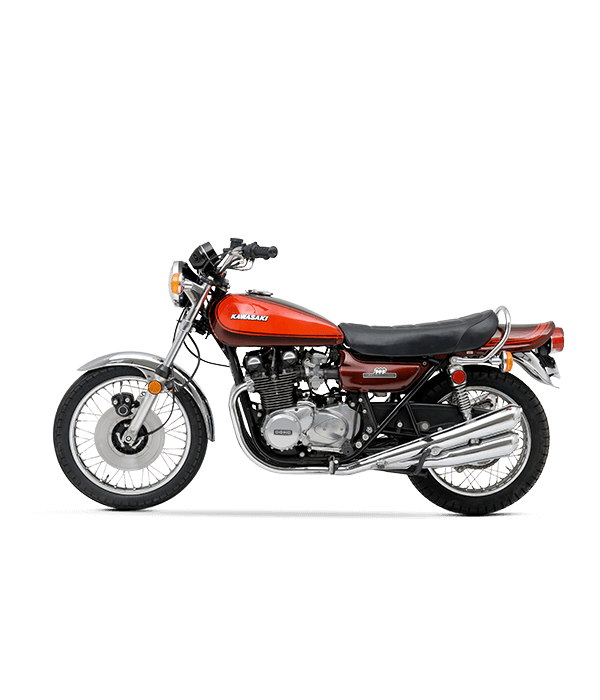
Kawasaki sales commence for the new four-cylinder four-stroke named the Z1-900. The Z1 quickly becomes the performance king of the superbikes by shattering the 24-hour World Record and setting 45 other World and AMA records at Daytona.
1974
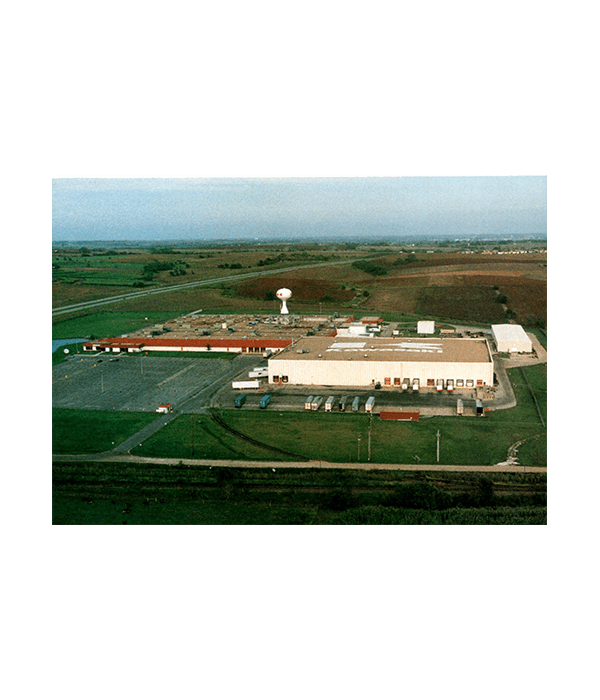
Kawasaki Motors Manufacturing Corp. opens its Lincoln, Nebraska facility.
1975
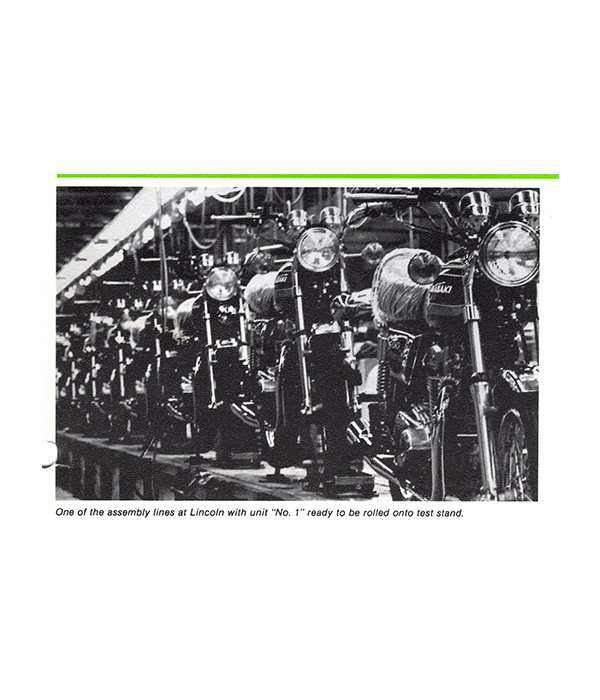
The KZ400 is the first motorcycle assembled in the United States by Kawasaki to roll out of the Lincoln plant on January 22nd.
1975
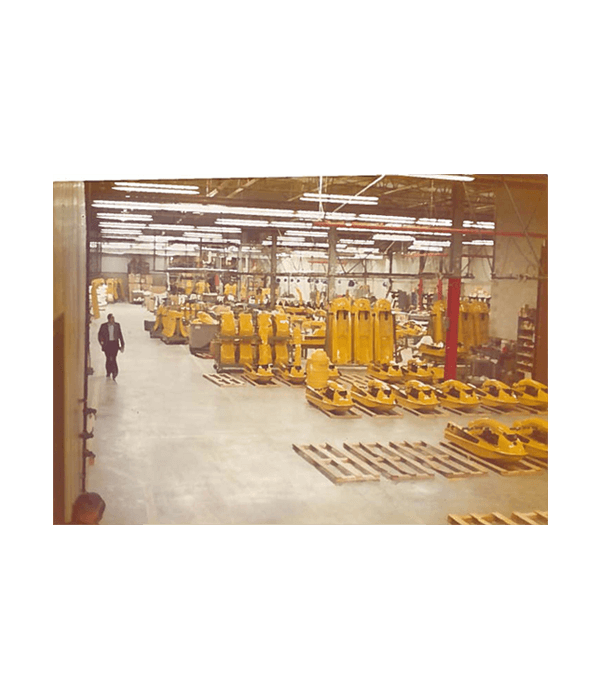
The Jet Ski® 400 watercraft, also produced in Lincoln, soon follows and Jet Ski becomes a registered trademark of Kawasaki.
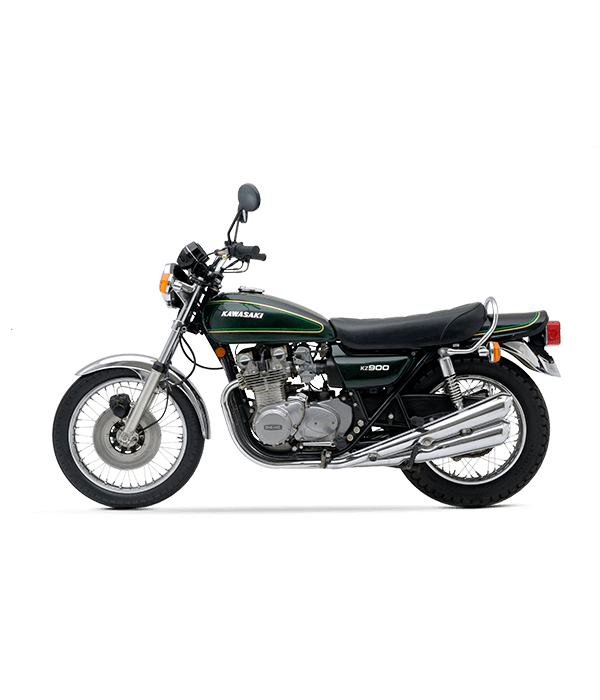
1976
Kawasaki celebrates its 10th anniversary in America. 1976 brings two variations of the KZ900 including the KZ900-B1 LTD, which is the first Japanese Custom Cruiser to come from the factory in Lincoln with a lot of chrome and bolt on accessories.
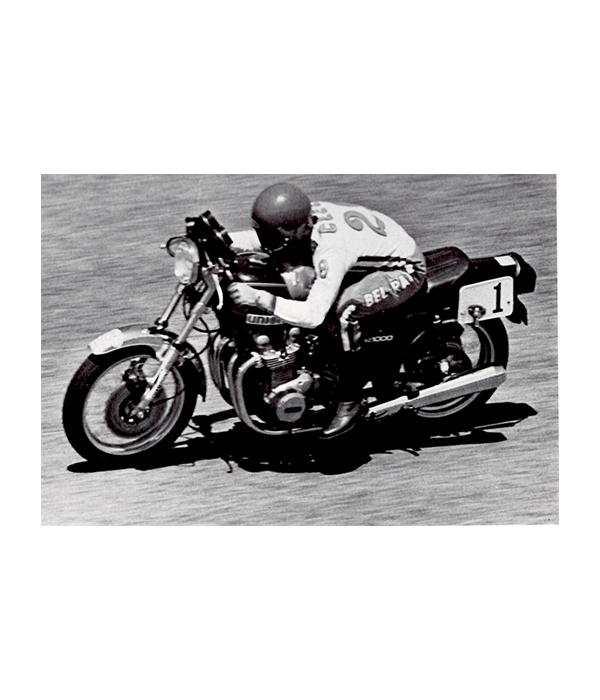
1977
Randy Cleet on the KZ650 sets eight World and AMA endurance records at Daytona, shattering the current 750cc records.
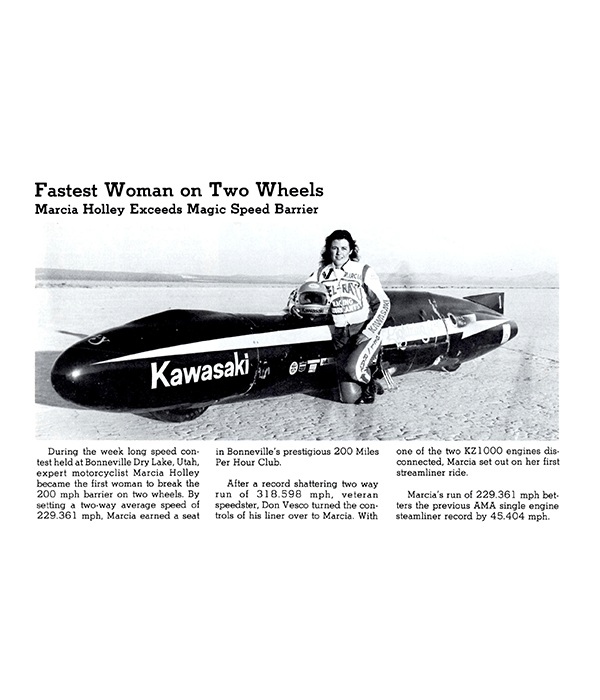
1978
Marcia Holley becomes the first woman to break the 200 MPH barrier on two wheels riding the turbocharged KZ1000. Don Vesco sets the world land speed record of 318.598 MPH aboard the “World’s Fastest Motorcycle” — the Kawasaki turbocharged twin KZ1000 powered streamliner.
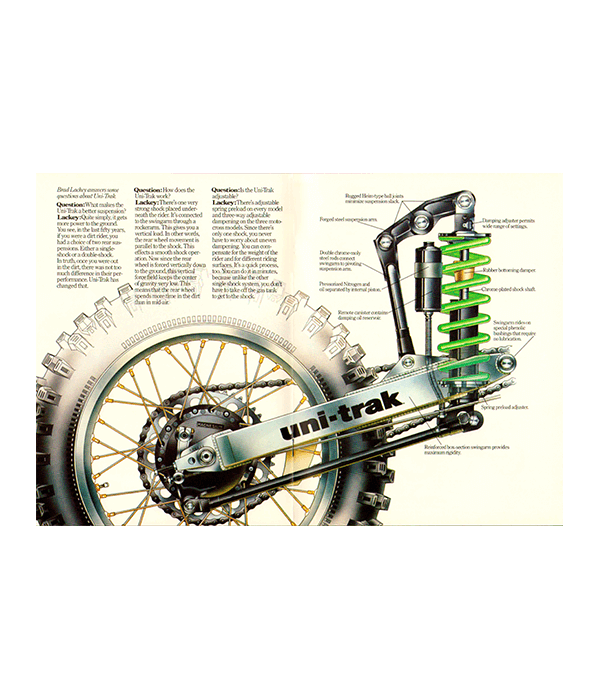
1979
Kawasaki Heavy Industries, Ltd. (KHI) develops a single shock suspension system called Uni-Trak®. The revolutionary Uni-Trak system is initially installed on works motocross machines and later became standard on select products. The Uni-Trak becomes the first mass produced linkage system in the motorcycle industry.
1980
The MULE™ utility vehicle—is born in San Diego, California, on a cocktail napkin in August of 1980. This new creation is named the “Pony Truck” and is nicknamed the four-wheeled three-wheeler. Three employees of Rocky Mountain Kawasaki (RMK)—a distributor of KMC—sketch their ideas out with a simple concept in mind: build a vehicle with four wheels that can carry two people and heavier loads than an ATV.
1981
Team Green™ starts in the winter of 1980/1981. The starting gate drops on the revolutionary Team Green motocross program for the very first time and history is born.
1981
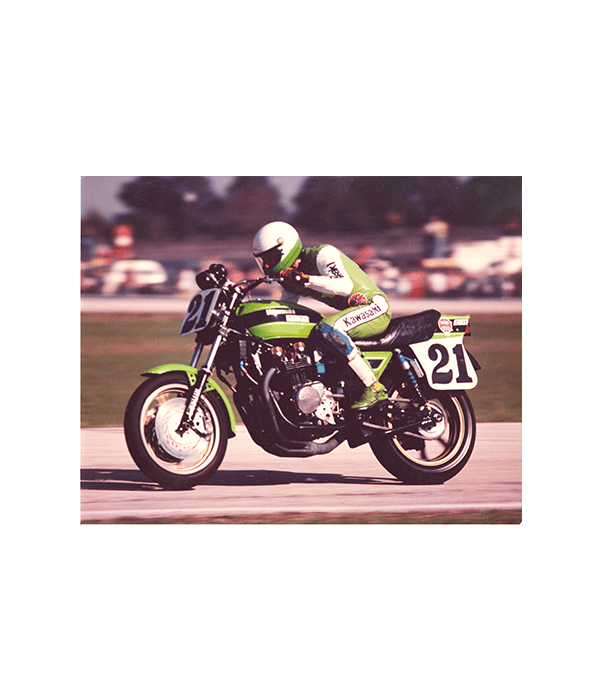
Eddie Lawson wins his first AMA Superbike Championship on the KZ1000 and Formula II 250 AMA Championship on the KR250cc.
1982
1982
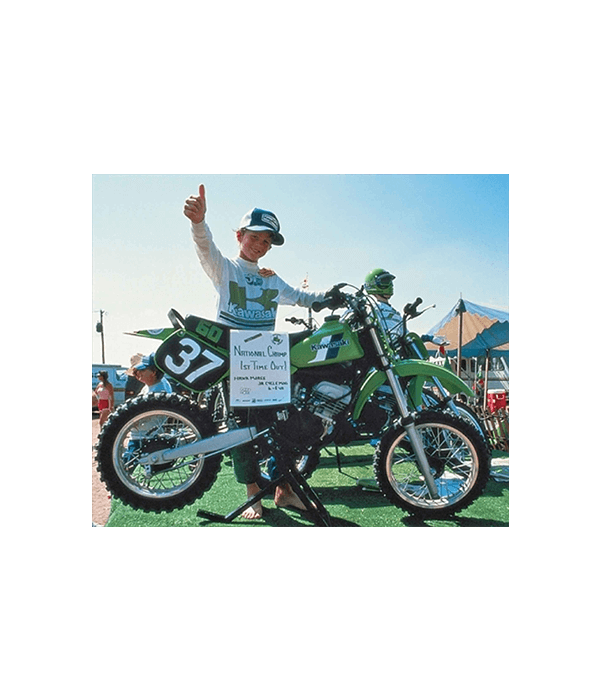
8-year-old “Hammerin” Hank Moree races and posts the very first win on the first-ever KX™60 (1983 pre-production) mini-bike at Ponca City. This begins a 19-year legacy of KX60 mini bike domination that continues through 2001 when the KX60 ceases production and is ultimately replaced by the newly updated KX™65.
1983
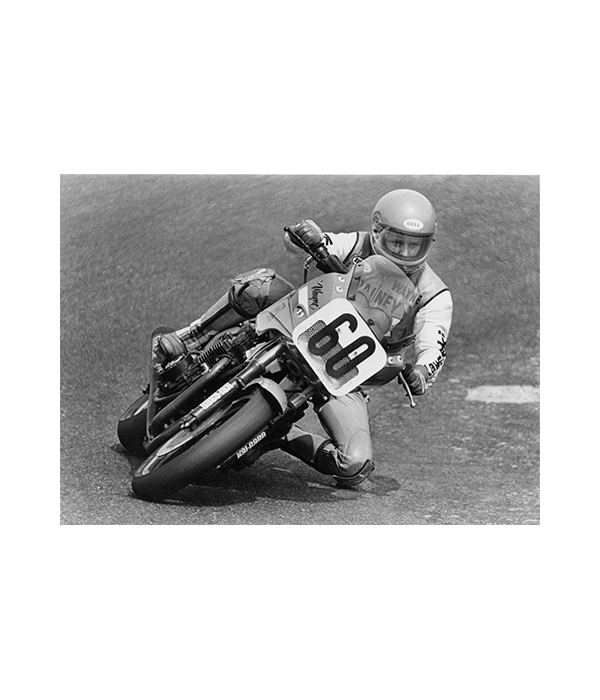
Wayne Rainey wins the AMA Superbike Championship on GPZ-750.
1984
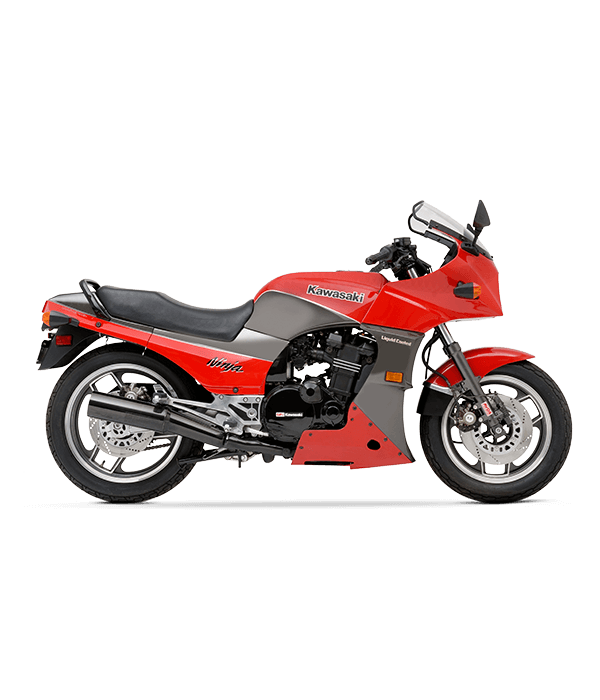
Kawasaki welcomes the world to a new generation of high-performance motorcycles by introducing the Ninja® 900 to the world press at the famous Laguna Seca Raceway.
1985
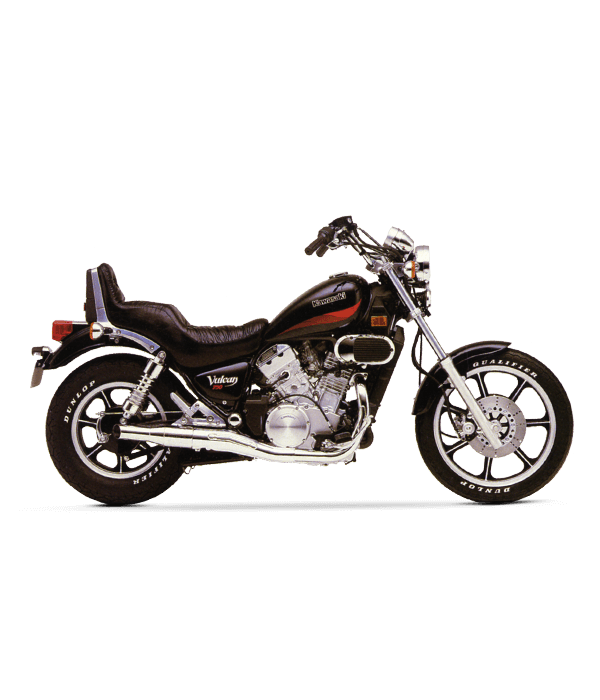
The 1985 Vulcan® 750 marks the first time a Kawasaki features a V-twin and is also Kawasaki’s first foray in the cruiser category. The VN750 was originally sold in the US with a 699cc engine before a tariff was lifted in 1986.
1986
THE 20TH ANNIVERSARY OF KMC Four buildings in Orange County, CA are consolidated into new Irvine corporate headquarters for sales, marketing, planning, finance, legal and administration.
1987
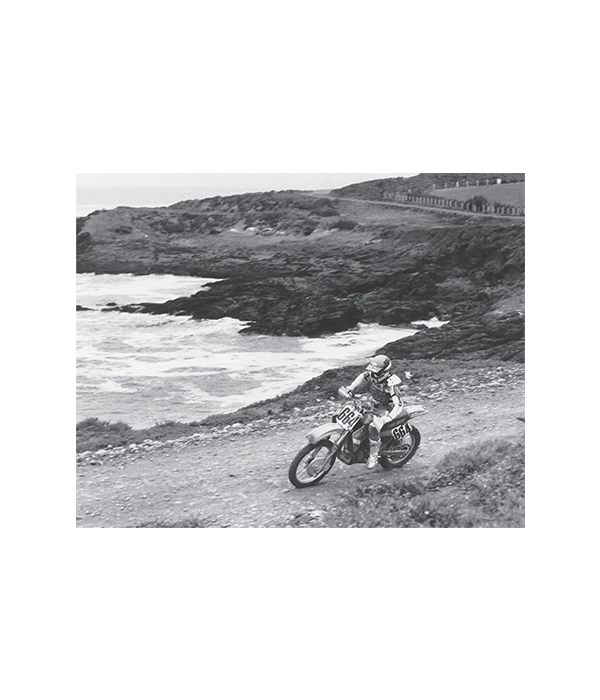
Team Green™ enters the world of off-road racing, winning its first Baja 1000 with established riders Larry Roeseler and Ted Hunnicut.
1988
Kawasaki introduces its first production utility vehicle–the 1988 KAF450-B1. Featuring a pick-up-truck-type design, the Kawasaki MULE™ side x side revolutionized the lightweight utility vehicle category. Powered by a liquid-cooled 454cc twin-cylinder engine mounted in an open-cab utility chassis with independent front and rear suspension, and rolling on four all-terrain tires with rear differential lock feature, the MULE 1000 utility vehicle is an immediate success.
1989
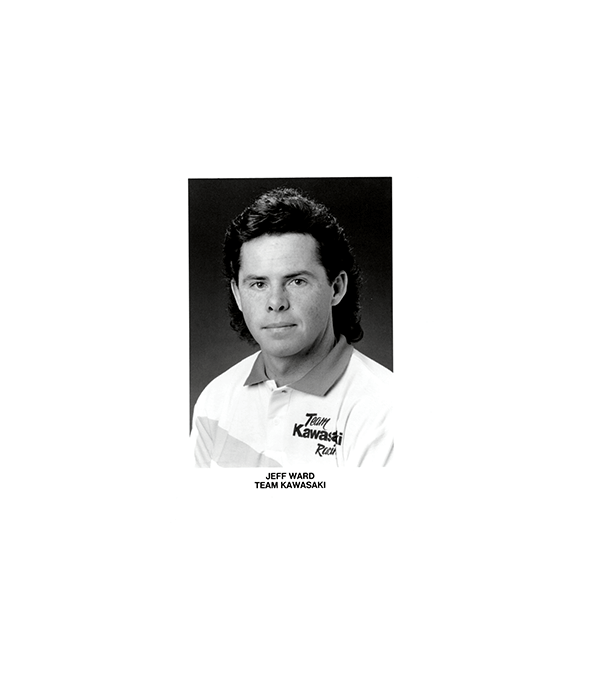
Jeff Ward wins the AMA 500cc National Moto-Cross Championship and becomes the only rider in AMA history to win every class on the same brand of bike, Kawasaki.
1990
One-millionth unit is assembled at the Lincoln assembly plant. Kawasaki Robotics (USA), Inc. becomes a subsidiary of KMC.
1991
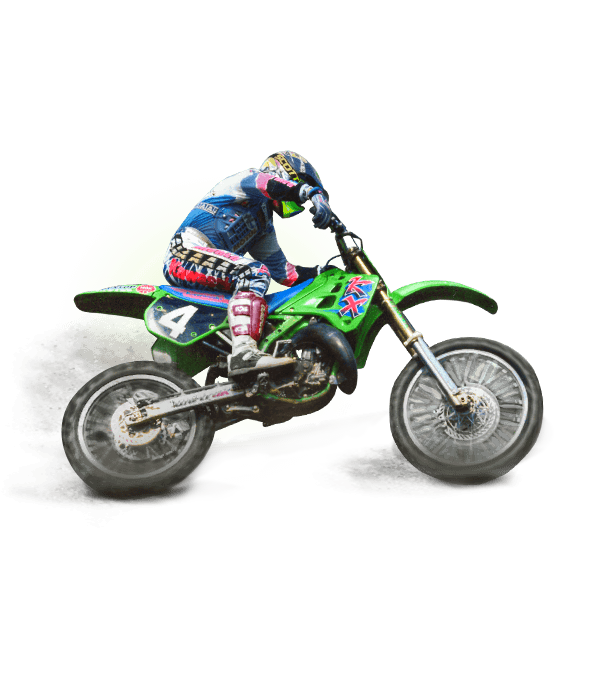
Kawasaki celebrates its 25th anniversary in America. Scott Russell takes first in the 750 Supersport and Mike Kiedrowski wins the 125cc AMA National Motocross Championship.
1992
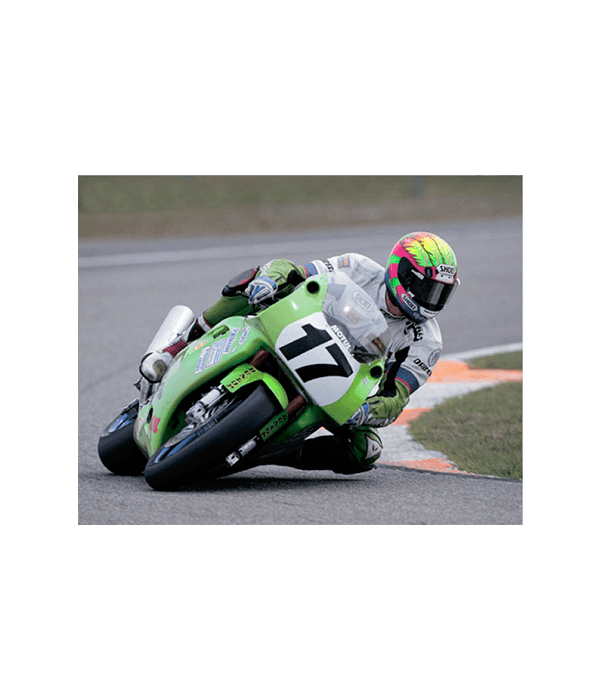
Scott Russell wins Daytona 200—the first ever for Kawasaki Motors Corp., U.S.A. Scott Russell also takes first at the AMA Superbike championship and the AMA 750 Supersport Championship.
1993
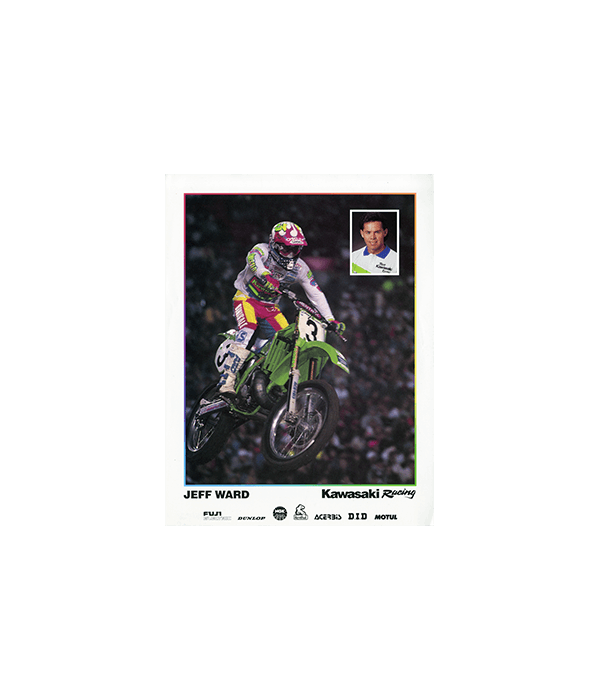
Jeff Ward retires with 7 National Championships, 20 Supercross victories and 55 National Motocross wins all on Kawasaki motorcycles. Pro Circuit racing joins Kawasaki as a factory supported Moto-Cross race team.
1995
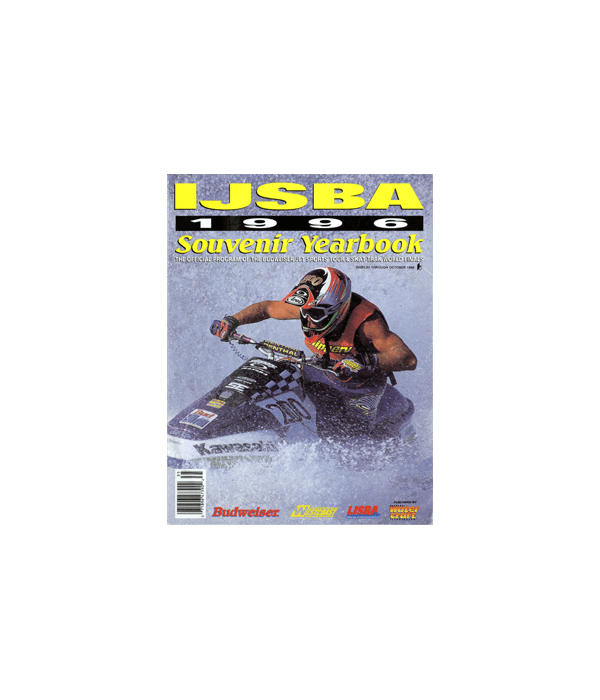
Victor Sheldon wins IJSBA Pro Runabout 785 National Championship. KMC starts first factory sponsored professional Personal Watercraft race team. Minoru Kanamori crowned IJSBA Pro Runabout 785 World champion and Pro Slalom World champion. Nicolas Rius wins IJSBA Pro Ski National Championship.
1996
KMC celebrates their 30-year anniversary. Doug Chandler wins AMA Superbike Championship.
1996
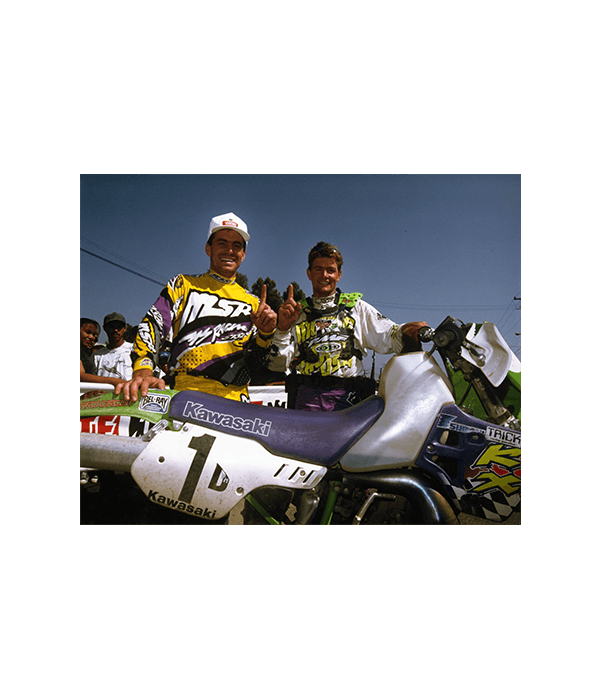
Ricky Carmichael graduates to the pro ranks, leaving behind his legacy as the winningest amateur rider of all time. Jeff Emig crowned AMA 250cc National MX Champion.
1997
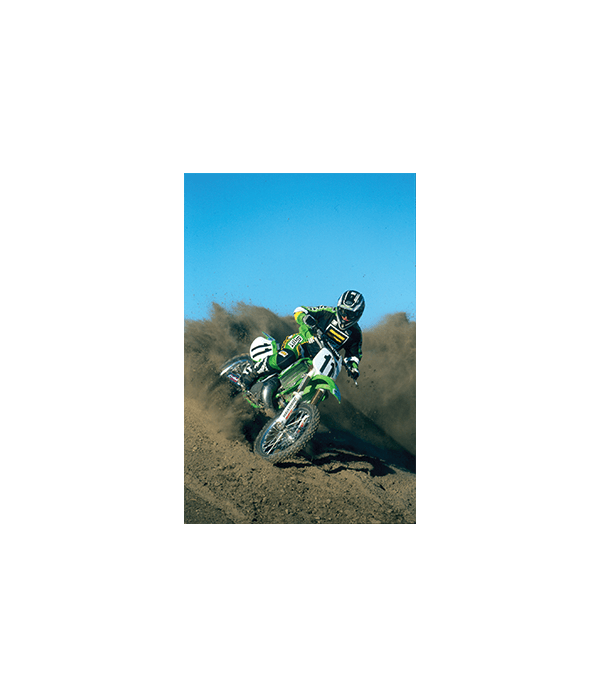
Jeff Emig wins the AMA Supercross Championship and the AMA National Moto-Cross Championship on the factory KX™250 Sr.
1998
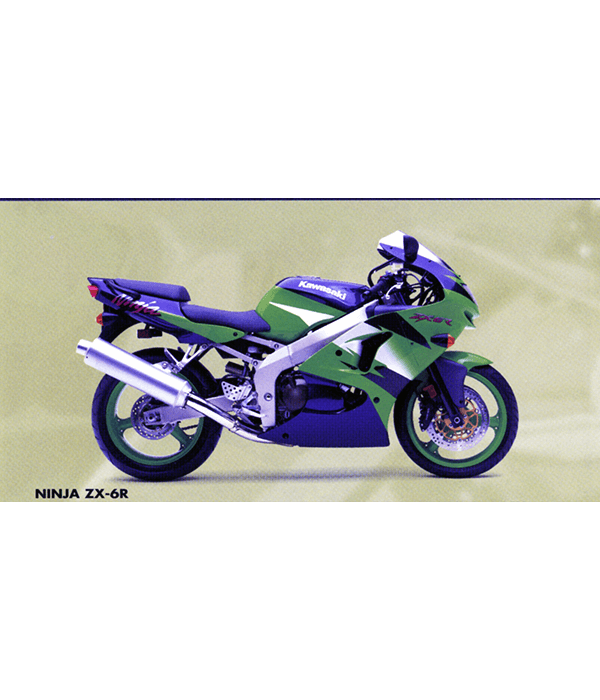
The “G” model of the ZX600 (ZX™-6R) is introduced in 1998 cementing Kawasaki as the sportbike to have, with more power resulting from a redesigned airbox, the ZX-6R is able to keep up with the 750cc superbikes of this time.
1999
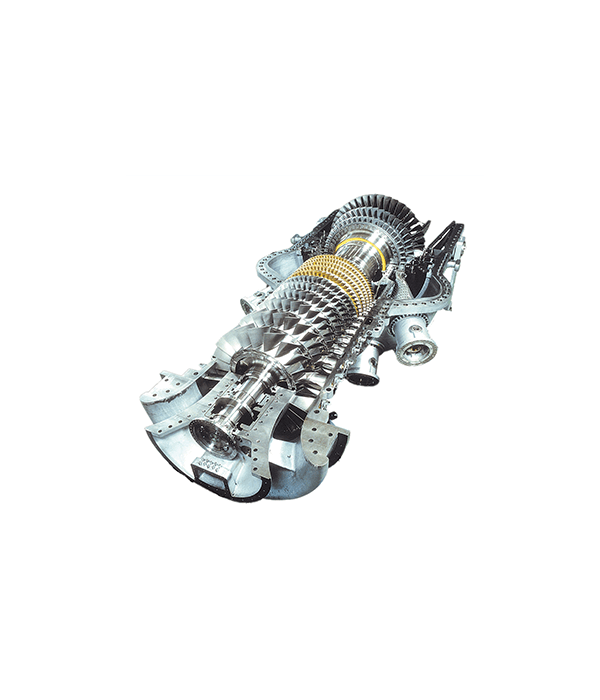
KMC establishes its Gas Turbine (KGTA) division in Grand Rapids, MI.
2000
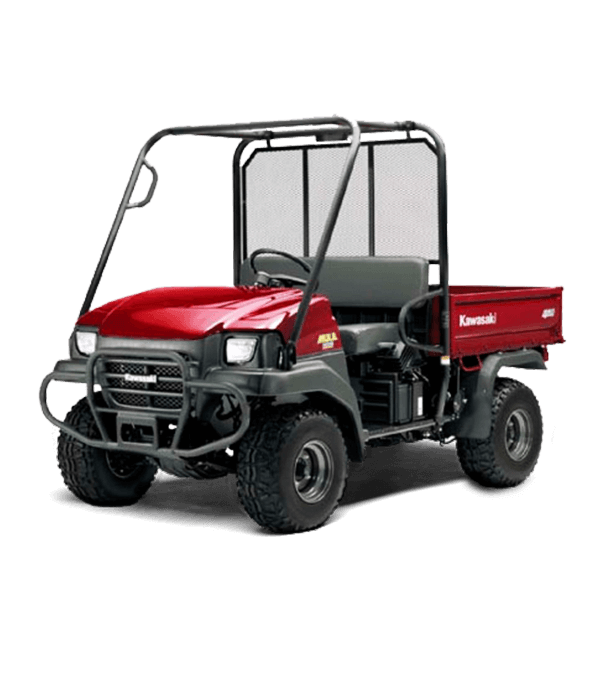
Kawasaki introduces the MULE™ 2510 Diesel (KAF950-A1)—the first diesel product in its side x side lineup. The diesel engine allows for better fuel economy and increased cargo capacity and is a popular choice in agriculture where diesel is widely used.
2001
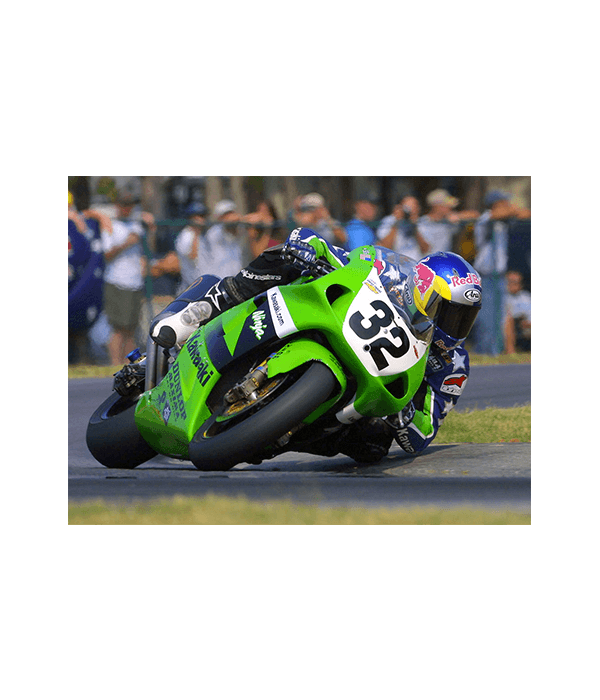
Eric Bostrom wins AMA 600 Supersport Championship. James Stewart holds the record for most career amateur national championships. He claimed his 11th AMA Amateur National Championship, surpassing Ricky Carmichael as the all-time winningest amateur rider.
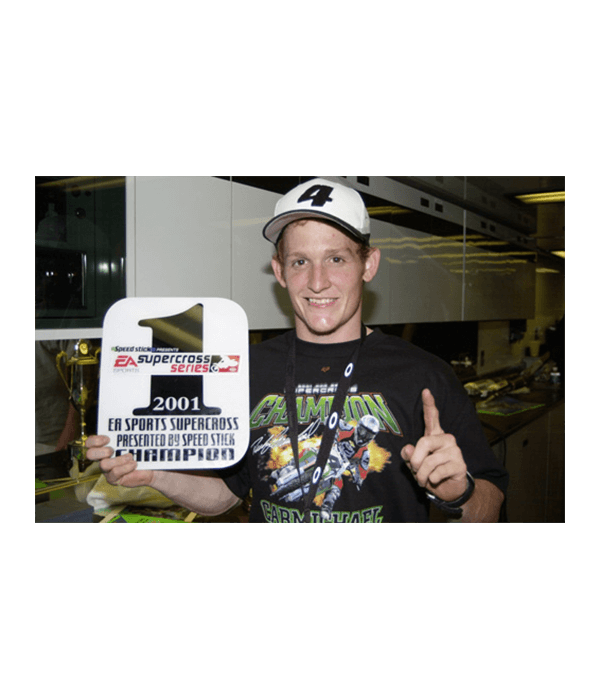
2001
Ricky Carmichael wins the AMA Supercross and National Moto-Cross Championships on the KX™250 SR.
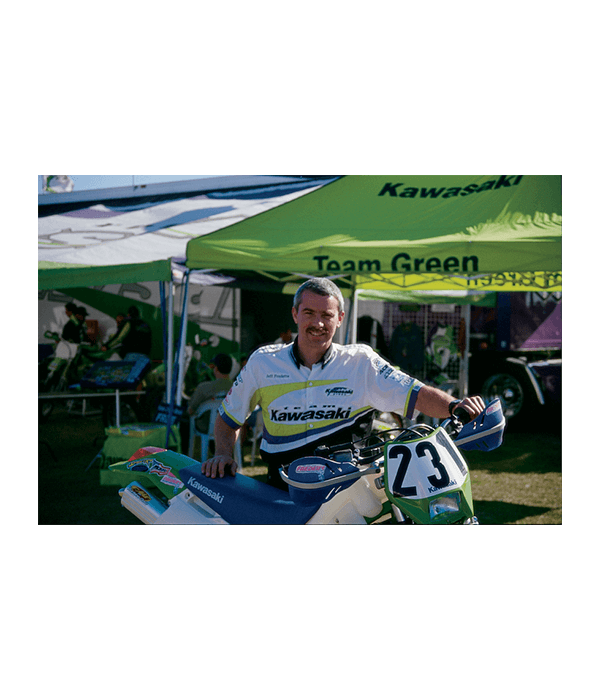
2002
Team Green™ racing team rider Jeff Fredette is inducted into the AMA Motorcycle Hall of Fame. James Stewart takes AMA 125cc National MX Championship.
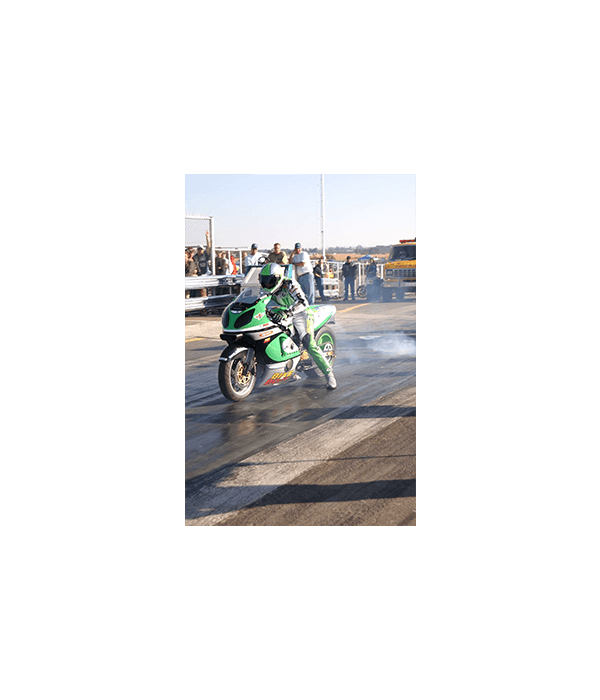
2003
Streetbike Shootout National Champion, Rickey Gadson, finishes the season with 6 wins out of 8 races.
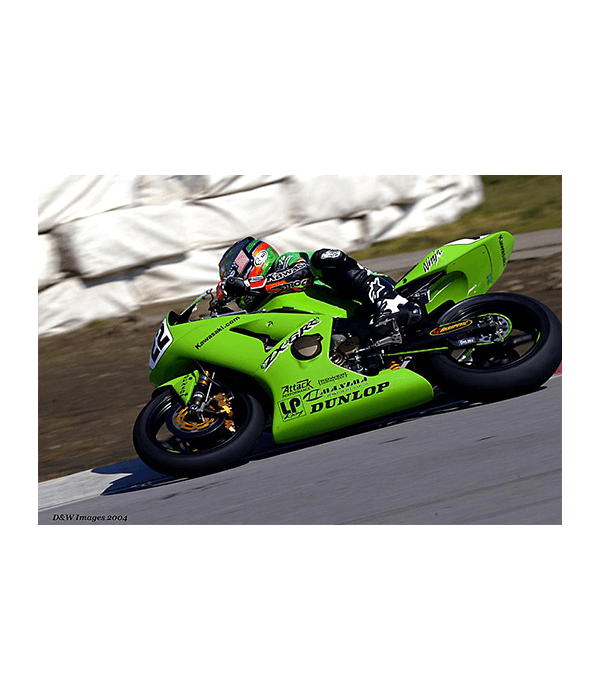
2004
Tommy Hayden takes first in the AMA 600 Supersport Championship followed by his brother, Roger Hayden in second, both aboard Ninja ZX600 motorcycles.
2005
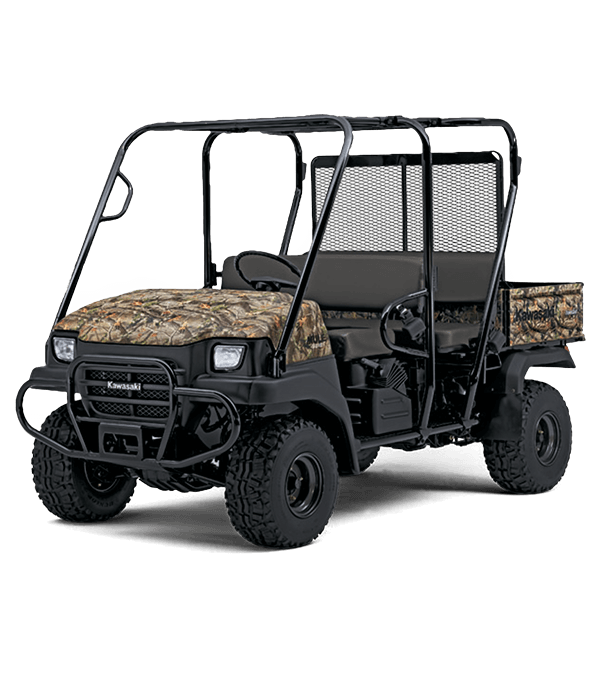
Kawasaki, continuing its legacy as a pioneer in the utility vehicle market, release the world’s first convertible MULE™ side x side. At first glance the MULE 3010 Trans4x4® looks like other 3000 Series MULE side x sides, but the Trans4x4 model features two rows of seats, enabling it to accommodate up to four passengers and giving the Trans4x4 greater flexibility. In four-passenger mode, a family, work crew or group of hunters can be accommodated; in two-passenger mode, cargo space is maximized.

2006
KMC celebrates their 40th anniversary.
2006
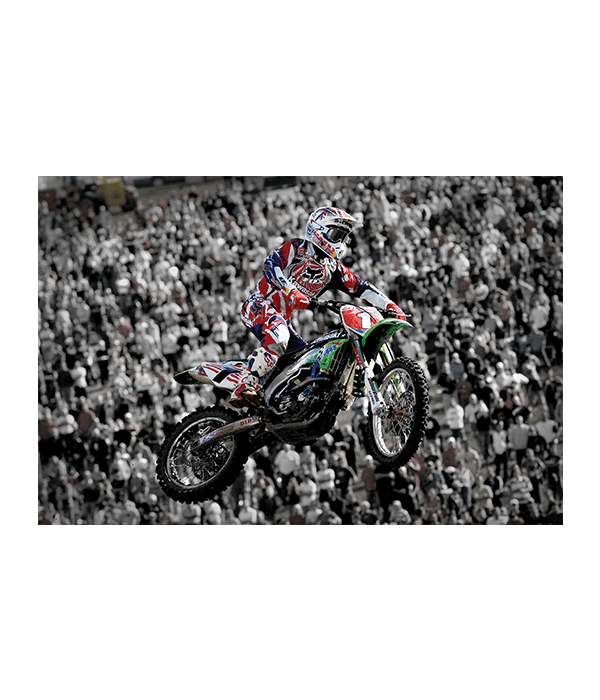
James Stewart wins the World FIM Supercross Championship.
2007
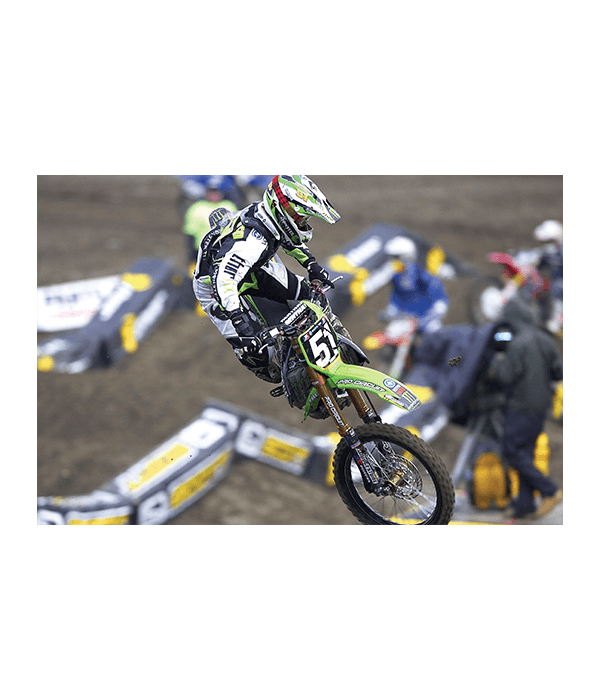
Ryan Villopoto captures the Supercross Lites West and the AMA MX Lites title.
2008
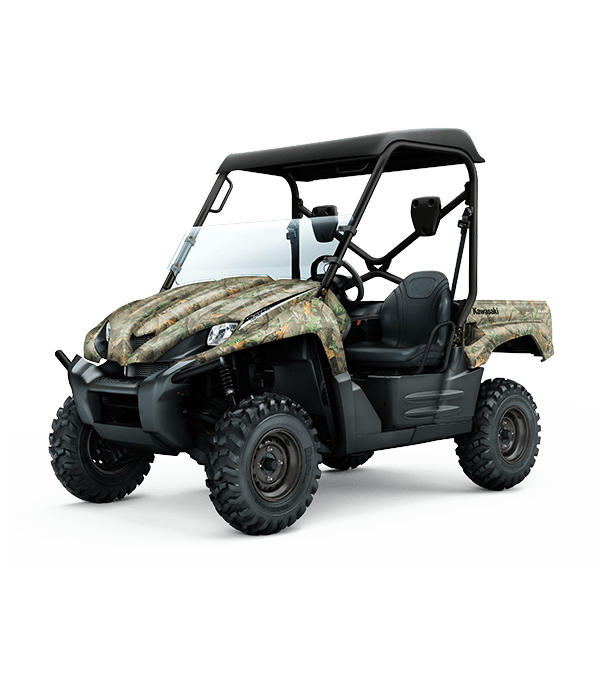
Kawasaki appeals to the outdoor segment with its 2008 Teryx™ 750 4x4 by offering three models in RealTree® camo which is designed to keep the vehicle from being spotted easily. The versatile side by side gives hunters a new way to bring two people and all of their gear out on the hunt.
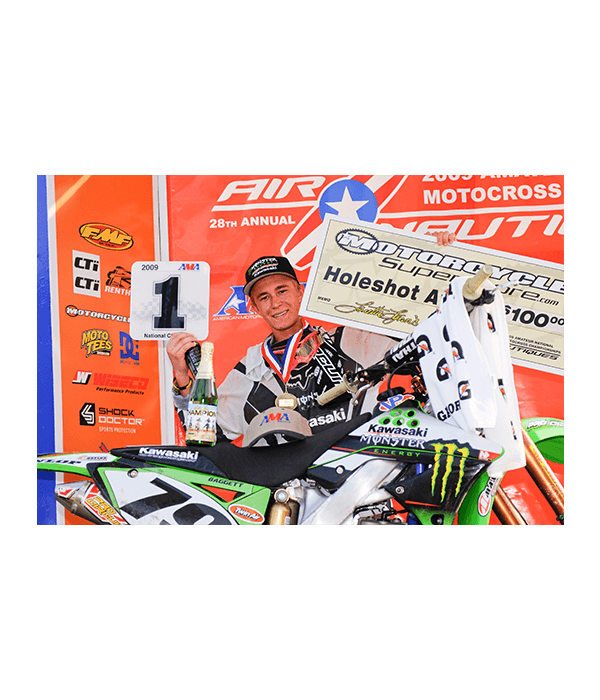
2009
Blake Baggett adds 250A/Pro Sport title to his list of championships. Team Green™ dominates Loretta Lynn’s Amateur Motocross with 17 championships. Teryx® claims BAJA 500 and BAJA 1000 victories.
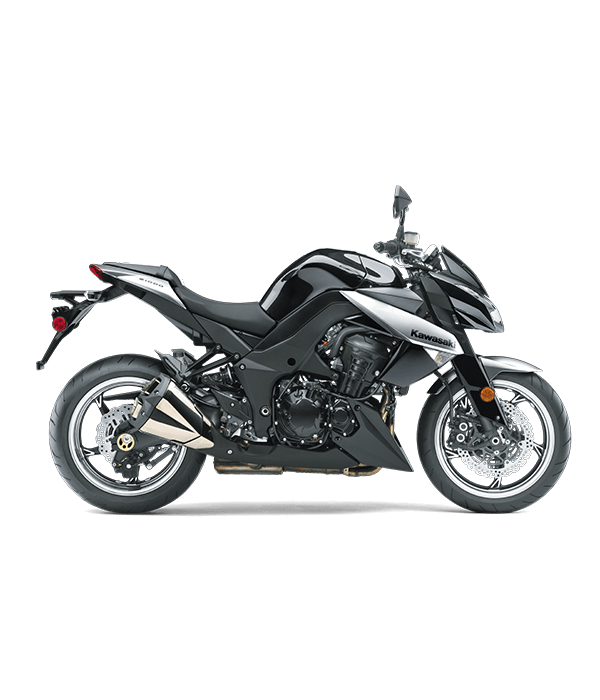
2010
Kawasaki takes the Supernaked concept in a new direction introducing the all-new Z1000 designed with complete design freedom. The new engine pumps out more horsepower and is hung in a new all-aluminum twin-spar backbone frame. It's finished off with new bodywork and a riding position that emphasizes both ride comfort and control. About the only thing that didn't change is the Z1000 mission: To provide an exhilarating ride!
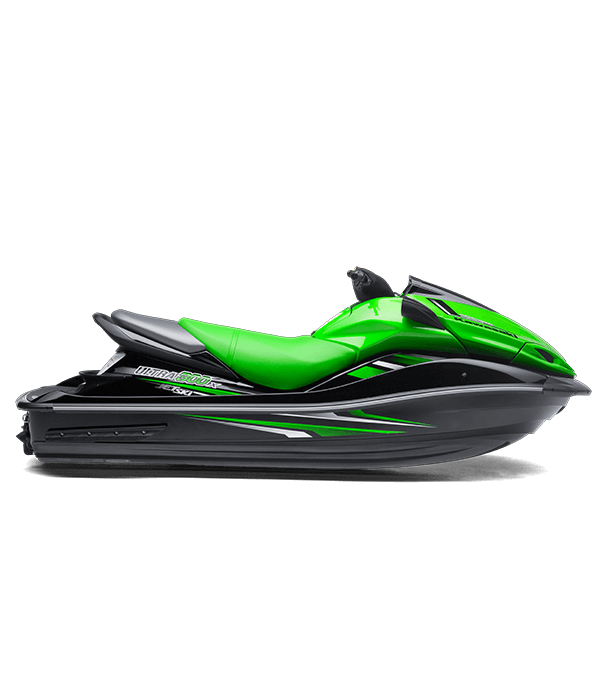
2011
The Jet Ski® Ultra® 300X watercraft is introduced—raising the bar, this is the first time anyone went over 300 HP and the first time a manufacturer produced a supercharged engine available in a production watercraft. New technology features like the electronic throttle valves, new riding modes like Fuel Economy Assistance Mode, One-touch 5 mph Mode and Electronic Cruise Control, and an electric trim-control system all contribute to its dominant performance.
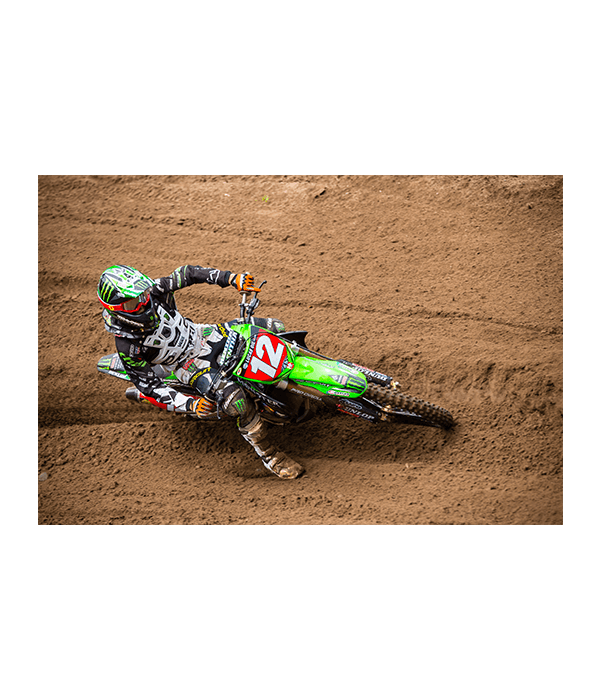
2012
Blake Baggett wins the AMA National Moto-Cross Championship on KX™250F.
2014
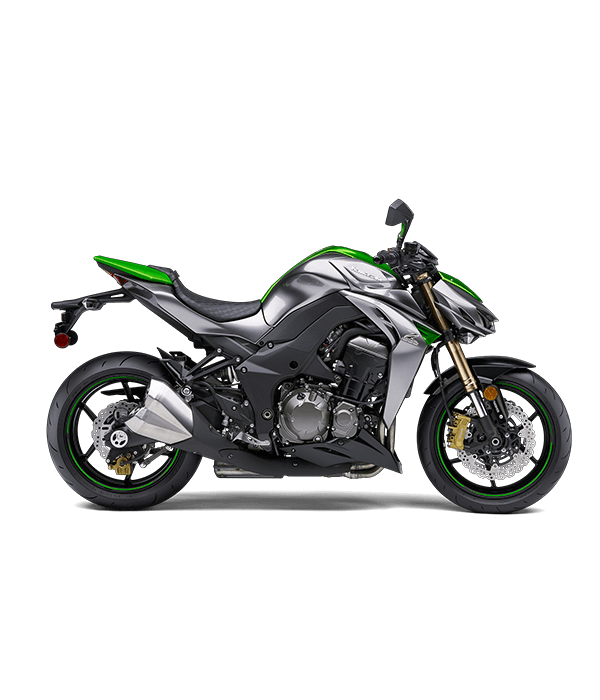
Created to be the most radical Supernaked in its highly competitive category, the new Z1000 takes a significant step forward in both looks and feel by introducing the sugomi design. Visually, the new model’s sugomi design advances the mass-forward crouching concept of its predecessor. Sugomi: The Japanese word sugomi describes the intense aura or energy given off by a person or object of greatness and felt by the viewer. Someone, or something, possessing sugomi inspires awe, leaves an indelible impression, is imposing in stature or ability, and commands respect. In the new Z1000, sugomi is evident both in its fiercely intense design and the exhilarating performance it delivers, radiating as a palpable energy.
2015
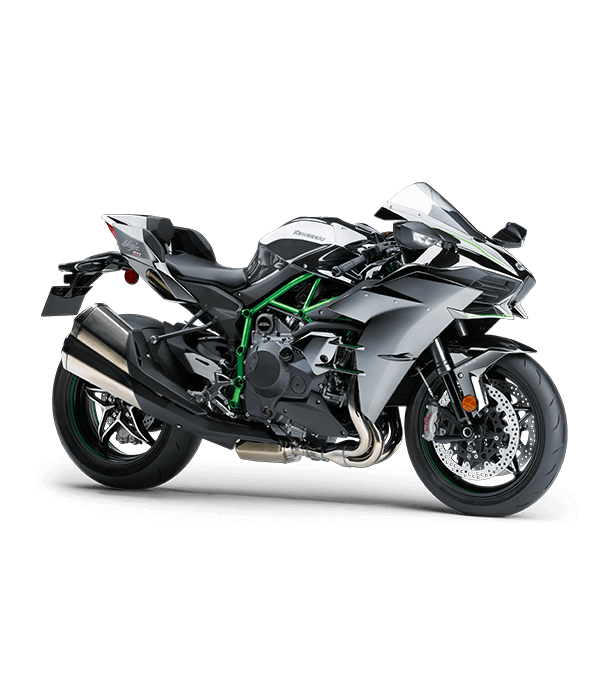
The Kawasaki Ninja H2R hypersport motorcycle is an engineering marvel, made possible only through the sourcing of technological expertise from multiple divisions of Kawasaki Heavy Industries, Ltd. (KHI). The result of this unprecedented collaboration is a system of carefully crafted premium components that work in concert to create an unbelievably powerful machine—one that’s more than worthy of the legendary H2 name.
2015
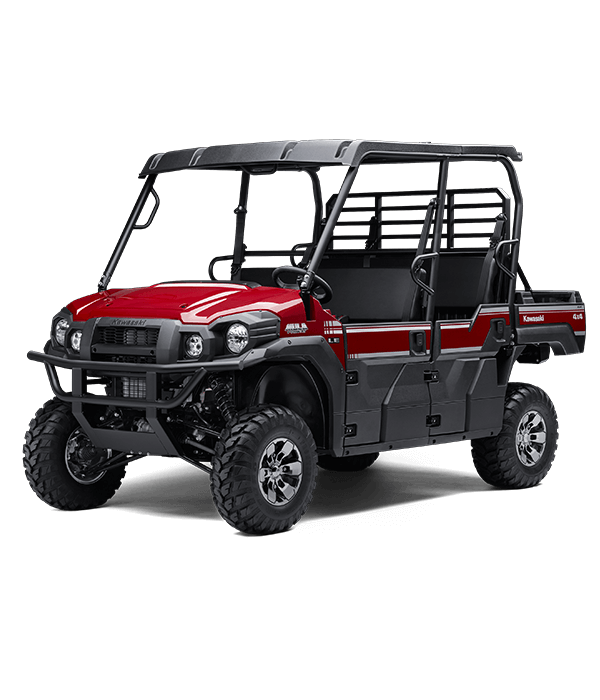
In 2015, Kawasaki changes the utility side x side market with the introduction of the MULE PRO-FXT™. Since the inception of the MULE over 35 years ago, and with over 130 years of Kawasaki Heavy Industries, Ltd. engineering, the latest edition of the MULE PRO-FXT has become a truly innovative new way to work and play. This full-size, high capacity, three-to-six passenger Trans Cab™ model brings a whole new level of comfort and performance.

2016
Exactly 50 years ago, on March 1, 1966, American Kawasaki Motorcycle Corp. (AKMC) opened for business in Chicago, with a modest sales office at 208 South La Salle Street and a two-story parts warehouse at 2860 North Lincoln Avenue. Today KMC has nearly 1,100 dealers in all 50 states and offers a wide range of products in five categories, including streetbikes, off-road motorcycles, ATVs, MULE™ utility vehicles, and JET SKI® personal watercraft. Many of the 4-wheel product and personal watercraft are assembled at Kawasaki Motors Manufacturing Corp., U.S.A. in Lincoln, Nebraska.
2023
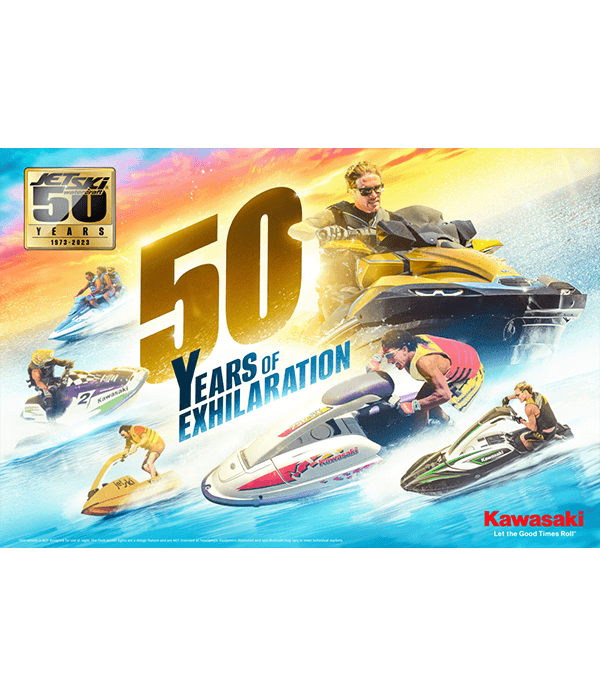
Jet Ski® 50th Anniversary
The name needs little introduction when it represents an entire category of
personal
watercraft. In 2023, Kawasaki Jet Ski® watercraft celebrated 50 years of
Good
Times on the water and 50 years of making waves with industry-leading
performance
and technology.
2023
KX™ 50th Anniversary
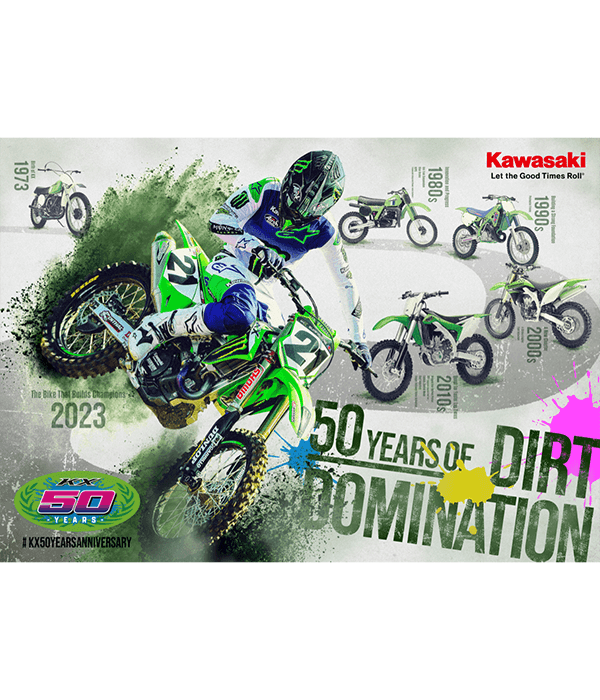
The Kawasaki KX™ celebrates 50 years as one of the most dominant brands of
motorcycles in motocross: 50 years of Kawasaki KX™ athletes gracing the
top
step of countless motocross and supercross races, and 50 years of relentless
commitment to engineering next-level, championship-proven race machines.
2023
Ninja® 40th Anniversary
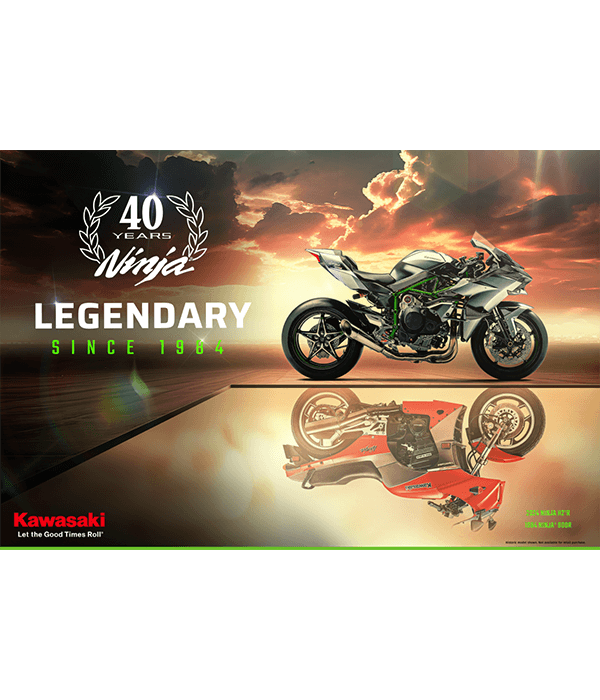
Kawasaki celebrates the 40th anniversary of the most iconic name in Kawasaki
sportbike history. From the first-ever model given the Ninja® name in 1984,
the
Kawasaki Ninja® GPz900R, to the current-day lineup, Ninja has become more
than
just a recognizable name over the last 40 years, it's become a way of life.
2023
Introduction of MULE PRO 1000 series
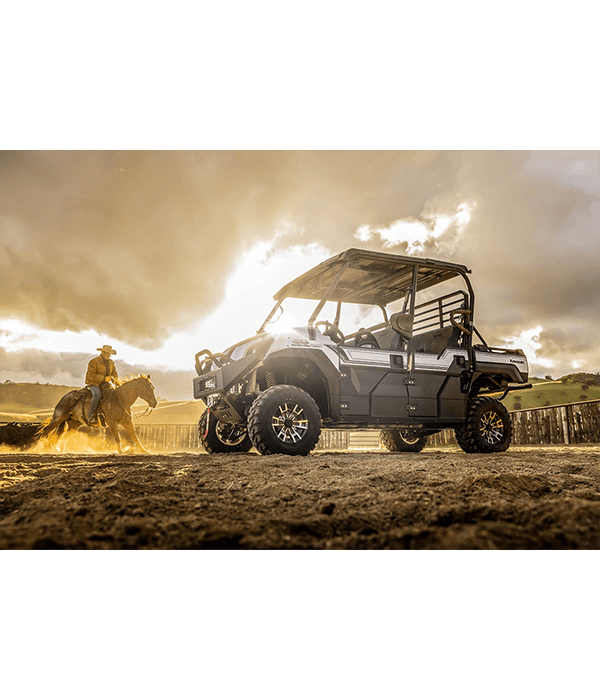
Kawasaki introduces a new series of side x sides to its 2024 MULE™ lineup
with
the MULE PRO-FX™ 1000, MULE PRO-FXR™ 1000, and MULE PRO-FXT™
1000
models. Kawasaki's MULE PRO 1000 models are renowned as full-size
utility/recreation
side x sides that offer high capability, durability, and class-leading comfort.

2023
Introduction of EV/Hybrid products
Kawasaki introduces an electric and hybrid lineup that kicked off their
“Go
with Green Power” initiative to achieve carbon neutrality and keep the
Good
Times rolling for generations to come. With innovation in Kawasaki's DNA, the
lineup
will continue to expand for years to come.

2024
Introduction of first inline-4 in a SxS (RIDGE)
For the first time ever, a Kawasaki side x side features an all-new 999cc
in-line
4-cylinder engine. The game-changing Kawasaki-built in-line 4-cylinder engine
delivers an impressive 92 horsepower* in the RIDGE®, while RIDGE® XR
goes
above and beyond with 116 horsepower*.
*HP measured per ISO standard 4106.
2024
Introduction of first fishing-focused Jet Ski
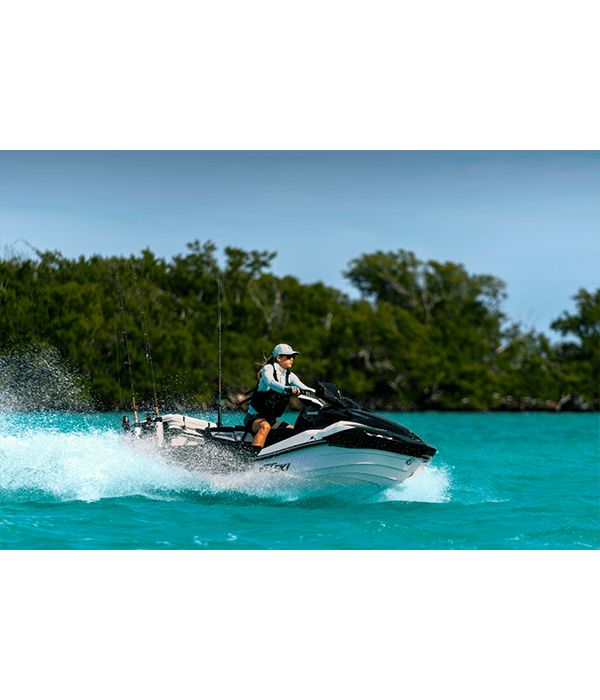
In 2024, the Jet Ski® Ultra® 160LX-S Angler splashed onto the scene as a
fishing-focused personal watercraft designed to be a compact powerhouse that
effortlessly takes the rider to their favorite fishing spots. Its smaller size
grants access to shallow, secluded areas that larger vessels can't reach so
fishing
enthusiasts can catch the Good Times.
2024
Engineering Excellence (1 of
2)
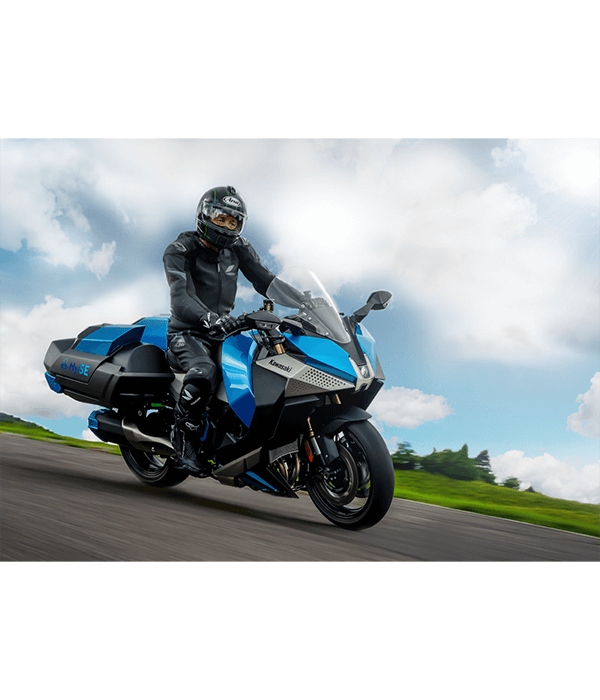
When it comes to engineering innovation, KHI is in a league of its own. Kawasaki
Motors Ltd. conducted the first* public demonstration of a hydrogen ICE
motorcycle
from a mass-production motorcycle manufacturer. This motorcycle features a
hydrogen
engine based on the 998cc in-line four supercharged engine found in the Ninja
H2® motorcycle, but with special modifications enabling direct injection of
hydrogen fuel into the cylinders.
2024
Engineering Excellence (2 of
2)
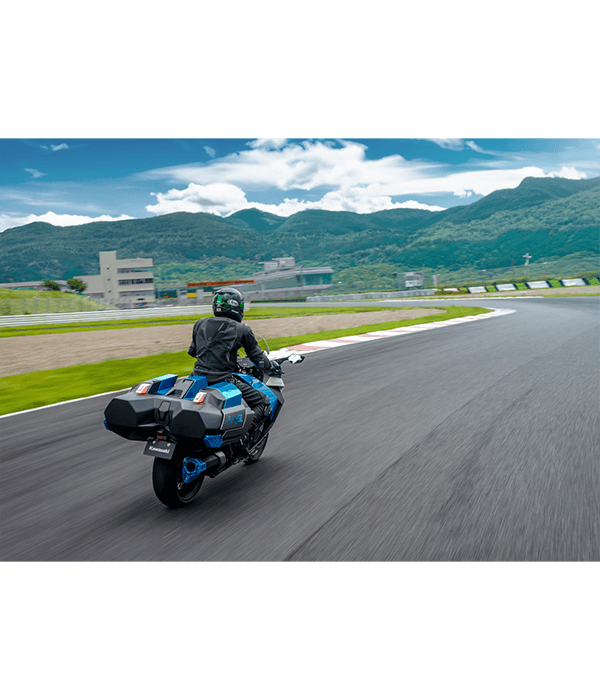
The chassis was also designed to integrate hydrogen fuel canisters and an
onboard
hydrogen fuel supply system. Hydrogen ICE motorcycles operate on hydrogen
combustion, delivering the rumble and pulsating sensation that riders love when
twisting the throttle, while emitting mainly water and a very small amount of
CO2.
*As of July 20, 2024
